
Table of Contents
ToggleTemple Style Tamarind Rice (Puliyodarai) – The Authentic South Indian Temple Prasadam Recipe
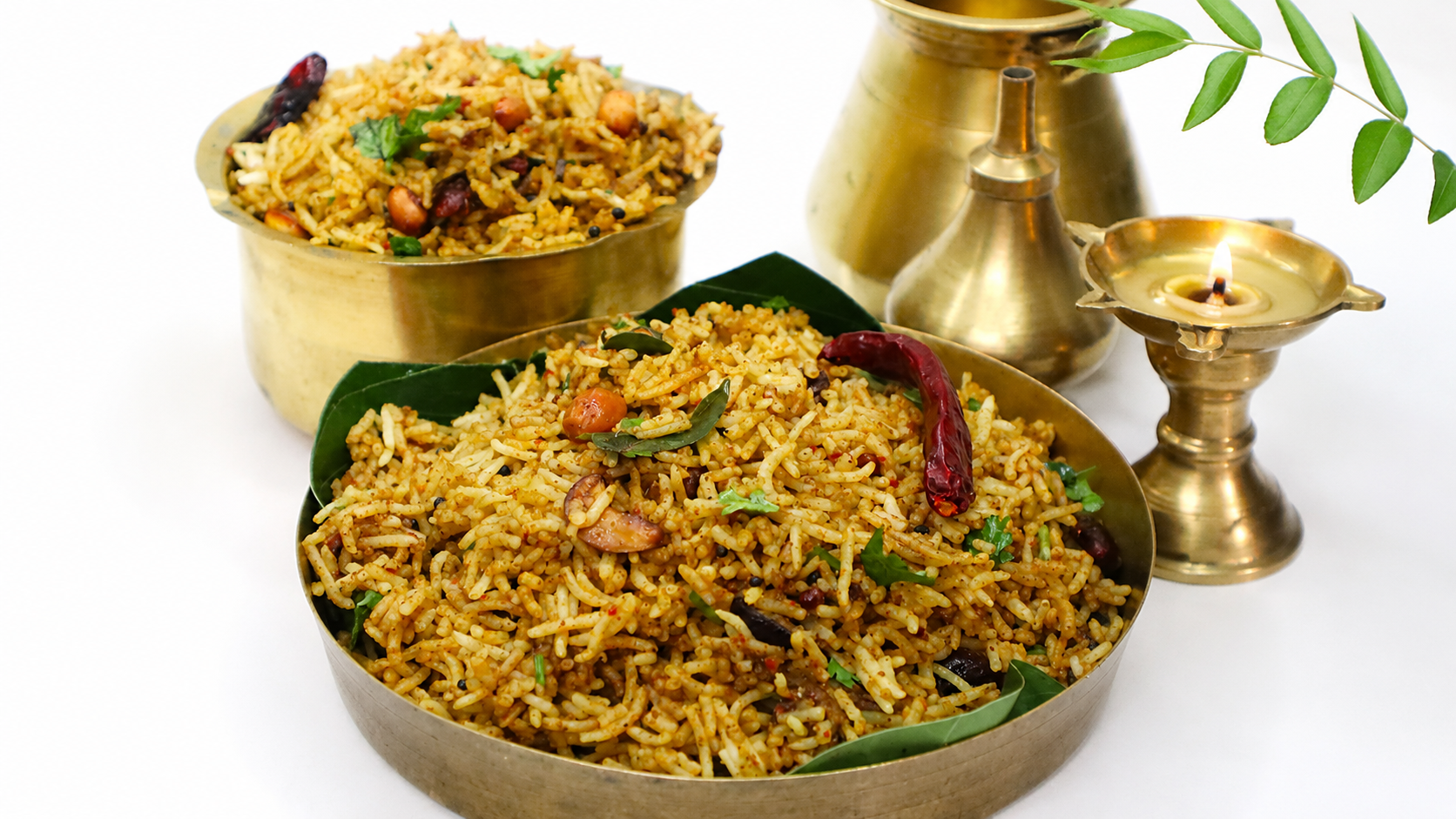
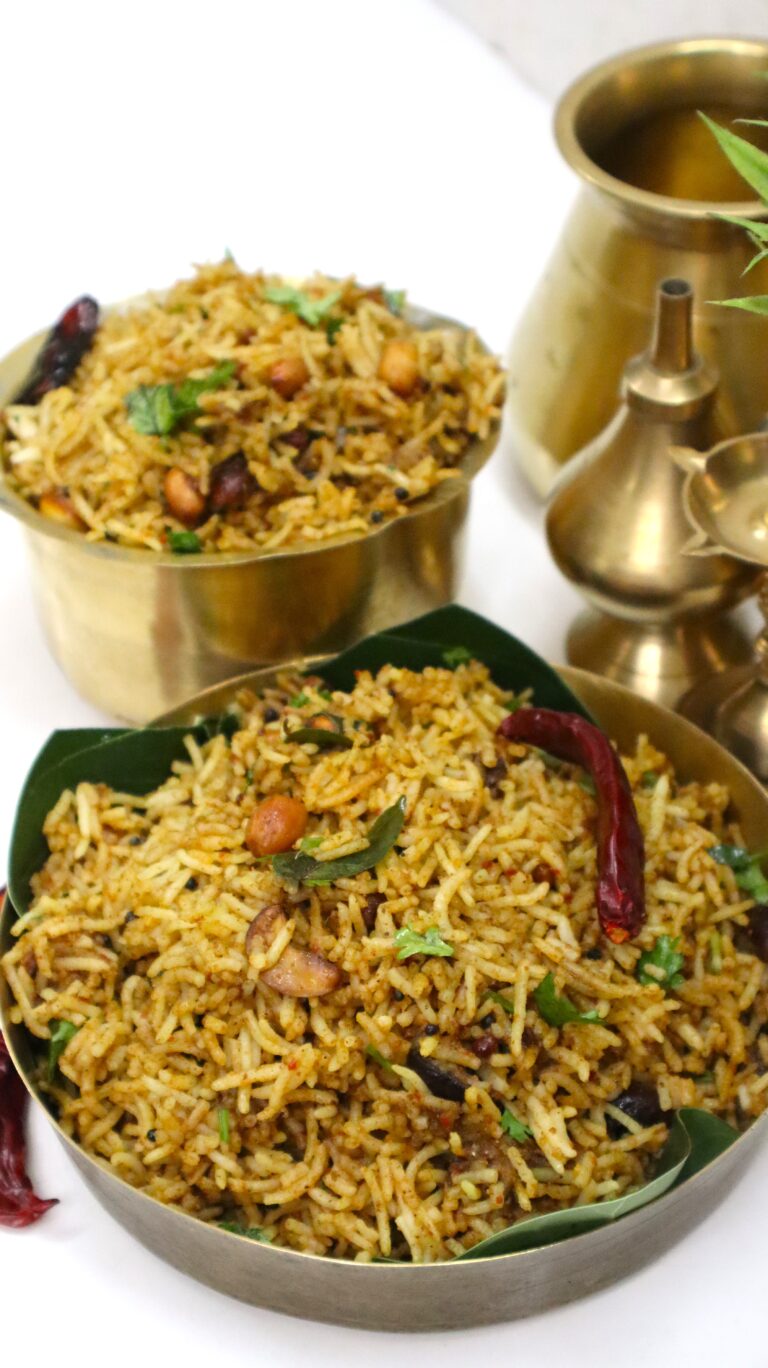
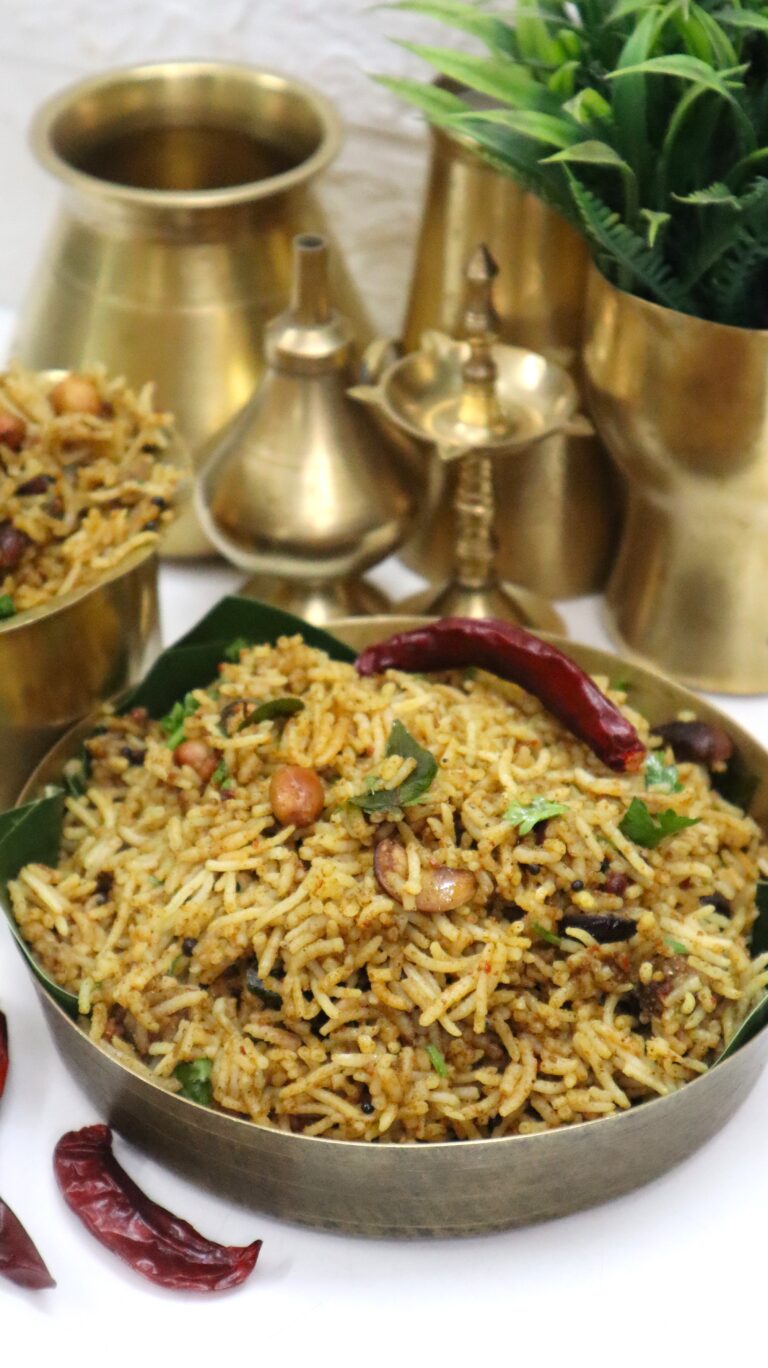
Some recipes are much more than just food—they’re memories, traditions, and emotions served on a plate. One such timeless delicacy is South Indian Temple Style Tamarind Rice, lovingly known as Puliyodarai or Puliyogare. If you’ve ever had the privilege of tasting this sacred prasadam at a South Indian temple, you already know how unforgettable it is. The aroma of roasted spices, the tanginess of tamarind, the subtle sweetness of jaggery, and the crunch of peanuts come together in perfect harmony.
That very first bite is truly a core memory. It instantly transports you to peaceful temple courtyards filled with the fragrance of fresh flowers, the soothing sound of temple bells, and the feeling of receiving warm prasadam with folded hands. Every grain of rice carries a beautiful balance of flavors that feels comforting, soulful, and deeply satisfying.
The secret behind authentic Temple Style Tamarind Rice lies in its freshly roasted spice blend. Unlike ordinary tamarind rice, this traditional version uses a homemade masala prepared with coriander seeds, cumin, fennel, fenugreek, peppercorns, mustard seeds, dried red chilies, coconut, sesame seeds, and fragrant curry leaves. When these spices are gently roasted, the kitchen fills with an irresistible aroma that immediately reminds you of South Indian temple kitchens.
Another special feature of this recipe is the use of sesame oil, which gives the rice its characteristic earthy flavor and authentic temple-style taste. The tamarind pulp is carefully balanced with jaggery so that every bite offers the perfect combination of tangy, mildly sweet, and gently spicy flavors. Crunchy peanuts, roasted dals, and golden cashews add wonderful texture, making every spoonful incredibly delicious.
Whether you’re preparing it for a festive celebration, offering it as prasadam, packing it for travel, serving it in a lunchbox, or simply craving comforting South Indian food, this Temple Style Tamarind Rice never disappoints. The best part is that it tastes even better after resting for a few hours, allowing the rice to absorb all the wonderful flavors of the masala.
If you have been searching for an authentic temple-style tamarind rice recipe that tastes just like the prasadam served in South Indian temples, this recipe is exactly what you need. It is simple to prepare, packed with traditional flavors, and guaranteed to become a family favorite.
Let’s begin this beautiful culinary journey and recreate the taste of authentic South Indian temple prasadam right in your own kitchen.
If you loved this recipe, don’t forget to check out our other festive Indian sweets
Chhena Poda Recipe | Odisha Special Chhena Poda
वांगी भात बनाने की विधि | Vangi Bhat Recipe| South Indian Brinjal Rice
Thai Mango Sticky Rice Recipe with Coconut Milk | Easy Summer Dessert Recipe
Mexican Rice with Creamy Veggie Gravy |No Onion–No Garlic Recipe
4 types of Quick & easy Rice recipe
Malpua with Rabdi Recipe | Holi Special Malpua Rabdi Recipe
Surati Ghari Recipe | How to Make Traditional Gujarati Sweet at Home
Churma Laddu Recipe | Traditional Sweet for Ganesh Chaturthi
Best Homemade Rasgulla Recipe | Soft, Juicy & Spongy Rasgulla Recipe
Rajbhog | How to make Rajbhog sweet recipe
Healthy Mango Cheesecake – Dairy-Free | Gluten-Free | Sugar-Free | No Biscuits | No Oven Needed
Video
Ingredients
For the Temple Style Masala
- 2 tablespoons coriander seeds
- 1 teaspoon cumin seeds
- 1 teaspoon fennel seeds
- ⅛ teaspoon fenugreek seeds
- ¼ teaspoon black peppercorns
- 1 teaspoon mustard seeds
- 4 dried red chilies
- 1 tablespoon dried coconut
- 1 sprig fresh curry leaves
- 1 teaspoon white sesame seeds
For the Tamarind Rice
- 3 cups cooked rice (completely cooled)
- 2 tablespoons tamarind, soaked in warm water
- 4 tablespoons sesame oil
- 1 tablespoon peanuts
- 1 teaspoon chana dal
- 1 teaspoon urad dal
- 6 cashew nuts
- 1 teaspoon mustard seeds
- 3 dried red chilies
- 1 sprig curry leaves
- ⅛ teaspoon asafoetida (hing)
- 2 tablespoons jaggery
- ¼ teaspoon turmeric powder
- Salt to taste
- 1 tablespoon finely chopped coriander leaves
Method
Step 1: Prepare the Masala
- Heat a heavy-bottomed pan over medium heat. Add the coriander seeds – 2 tbsp, cumin seeds – 1 tsp, fennel seeds – 1 tsp, fenugreek seeds – 1/8 tsp, black peppercorns – 1/4 tsp, mustard seeds – 1 tsp, and dried red chilies – 4. Dry roast them gently until they become aromatic. Be careful not to burn the spices, as that can make the masala bitter.
- Next, add the dried coconut – 1 tbsp, fresh curry leaves – 1 sprig, and white sesame seeds – 1 tsp. Continue roasting for another 1–2 minutes until the curry leaves turn crisp and the coconut develops a light golden color. The wonderful aroma of the roasted spices will fill your kitchen.
- Turn off the heat and allow everything to cool completely. Transfer the roasted ingredients to a mixer jar and grind them into a fine powder. Your authentic Temple Style Tamarind Rice masala is now ready.
Step 2: Prepare the Tempering
- Heat sesame oil – 4 tbsp in a large pan.
- Add the peanuts – 1 tbsp and fry until lightly golden.
- Next, add the chana dal – 1 tsp, urad dal 1 tsp, and cashew nuts – 6, mustard seeds – 1 tsp. Roast them until they become crisp and beautifully golden.
- Add the dried red chilies – 3, curry leaves – 1 sprig, and asafoetida – 1/8 tsp. Stir for a few seconds until the curry leaves become fragrant.
Step 3: Prepare the Tamarind Mixture
- Now add 2 tablespoons tamarind, soaked in warm water.. Pour the tamarind water into the pan.
- Add jaggery – 2 tbsp, turmeric powder – 1/4 tsp, and salt. Stir well until the jaggery melts completely.
- Now add the freshly ground spice powder and cook the mixture for 2–3 minutes over medium heat. The mixture will slightly thicken, and all the flavors will blend beautifully into a rich, aromatic tamarind base.
Step 4: Mix the Rice
- Add the cooled cooked rice to the prepared tamarind mixture.
- Using a wide spatula, gently fold the rice so every grain gets evenly coated with the flavorful masala. Avoid overmixing to keep the rice grains separate.
- Finally, garnish with freshly chopped coriander leaves.
- Allow the rice to rest for about 15–20 minutes before serving. This resting time helps the rice absorb all the delicious flavors, making it taste even better.
Serving Suggestions
Temple Style Tamarind Rice is delicious on its own, but you can also serve it with:
- Crispy papad
- Curd or plain yogurt
- Coconut chutney
- Potato fry
- Banana chips
- Appalam
- South Indian pickle
It is also perfect for lunch boxes, road trips, picnics, festive meals, and temple offerings.
Temple Style Tamarind Rice is much more than a simple rice recipe—it is a beautiful celebration of South Indian culinary tradition. Every spoonful carries the warmth of home, the richness of freshly roasted spices, and the comforting flavors of sacred temple prasadam. The balance of tangy tamarind, earthy sesame oil, aromatic homemade masala, crunchy nuts, and the gentle sweetness of jaggery creates a dish that is both nostalgic and incredibly satisfying.
Whether you prepare it for festivals, family lunches, travel meals, or as an offering to the Almighty, this timeless recipe is sure to fill your kitchen with irresistible aromas and your heart with joy.
Give this authentic Temple Style Tamarind Rice recipe a try, and bring the divine taste of South Indian temple prasadam to your dining table.
Tips & Tricks
- Always use completely cooled rice for the best texture.
- Sesame oil gives the authentic temple-style flavor, so avoid substituting it with other oils.
- Roast the spices on low heat to preserve their aroma.
- Freshly ground masala makes a huge difference in taste.
- Adjust the jaggery according to the sourness of your tamarind.
- The rice tastes even better after resting for a few hours.
- You can prepare the masala in advance and store it in an airtight container for several weeks.
- For a more authentic South Indian flavor, use short-grain rice varieties like Sona Masuri.
Frequently Asked Questions
Can I prepare the masala ahead of time?
Yes. Store the roasted and ground masala in an airtight container for up to one month.
Which rice works best?
Sona Masuri is the traditional choice, but any non-sticky rice works well.
Can I skip jaggery?
Jaggery is highly recommended because it balances the tanginess of tamarind and gives the authentic temple-style taste.
Why should the rice be cooled?
Hot rice can become mushy while mixing. Cooled rice stays fluffy and absorbs the masala beautifully.