
Table of Contents
ToggleWhy protein is important in a vegetarian diet? My journey to understanding protein
Quick Takeaway
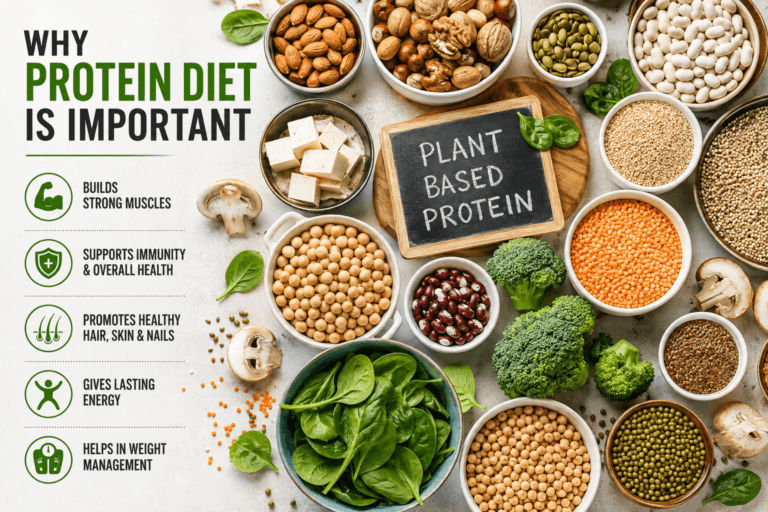
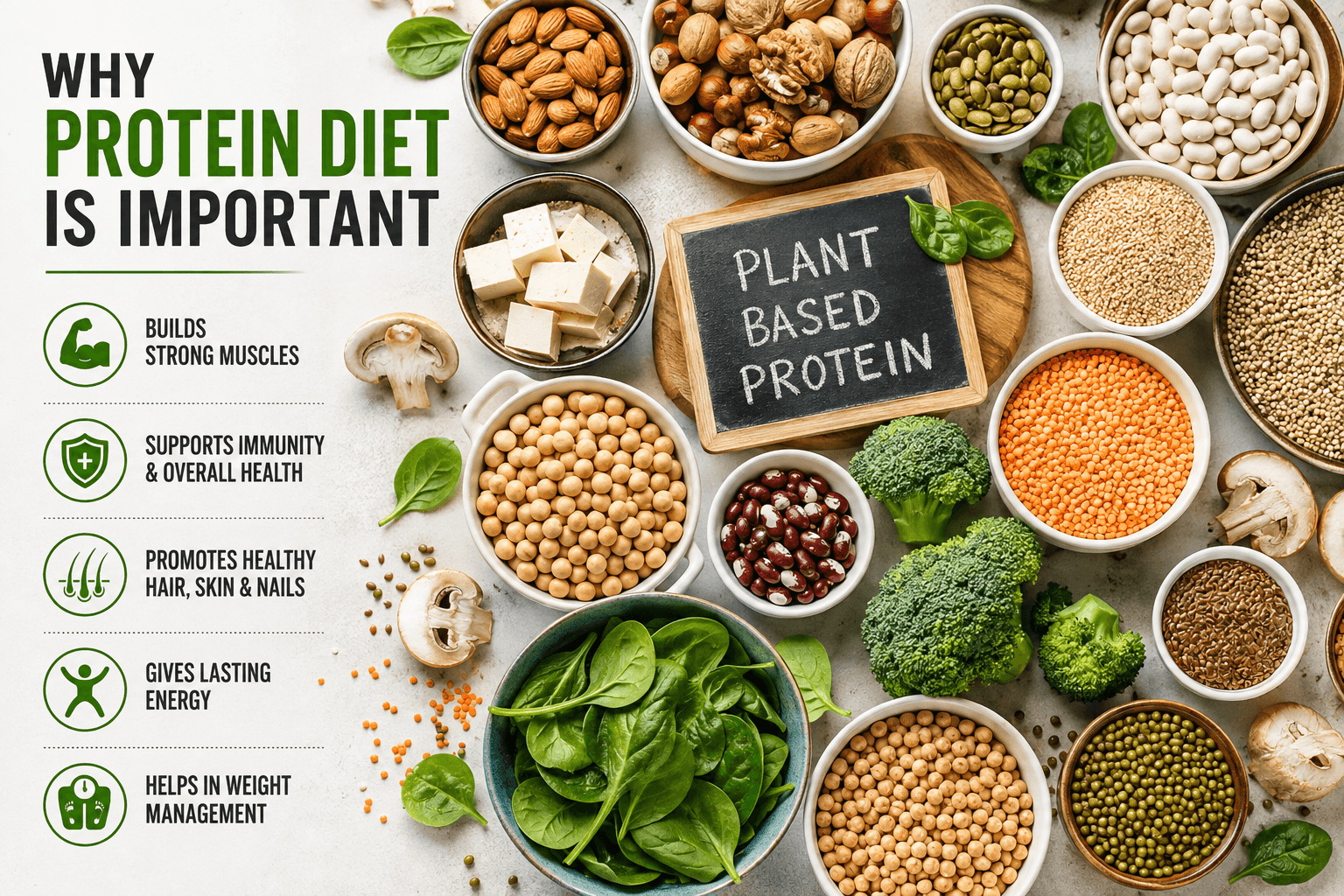
Protein is an essential part of a balanced vegetarian diet. You don’t need expensive supplements to include protein in your meals. Foods such as dal, beans, chole, rajma, soy, tofu, paneer, dairy, nuts and seeds can all contribute to your daily protein intake. Your individual requirement depends on factors such as body weight, age, activity level and health status.
Every morning, I used to wake up with the same thought:
“I want to eat healthy. But am I actually eating healthy?”
I had started paying more attention to my diet. I was trying to reduce junk food, eat more fruits and vegetables, and stay away from sugary drinks.
I genuinely felt that I was doing everything right.
But there was one thing I had never really thought about.
Whenever I heard the word “protein,” I immediately imagined gym-goers drinking protein shakes, building muscles, and following strict fitness diets.
I used to wonder:
“I don’t go to the gym every day. Why do I need so much protein?”
Then one day, while having breakfast, I found myself asking a very simple question:
“Is protein really that important if I am vegetarian?”
The answer changed the way I looked at my food.
Yes. Protein is not just for bodybuilders. It is something every body needs.
And that’s where my journey toward understanding vegetarian protein began.
Why This Matters for Indian Women
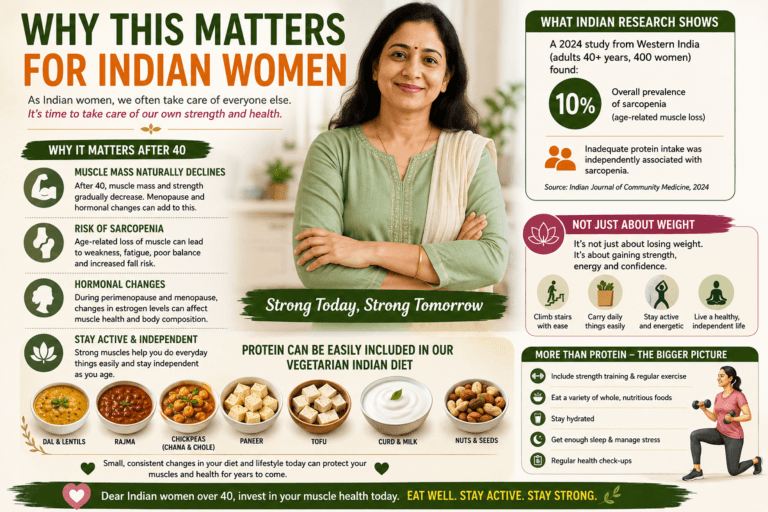
This topic is especially important for Indian women because our everyday meals can sometimes make it easy to overlook protein.
We may eat plenty of roti, rice, vegetables, fruits, tea, snacks, and traditional meals, but that does not automatically mean that every meal contains a meaningful protein source.
As we get older, maintaining muscle strength and physical function becomes increasingly important. Muscle health is influenced by several factors, including physical activity, nutrition, age, and overall health.
That is why I believe it is worth paying attention to protein as part of a balanced lifestyle rather than waiting until we experience weakness or loss of strength.
Protein Is More Than Just a "Gym Nutrient"
Before I started learning about protein, I thought it was mainly something people talked about when they wanted to build muscles.
But I slowly realized that protein is much more than that.
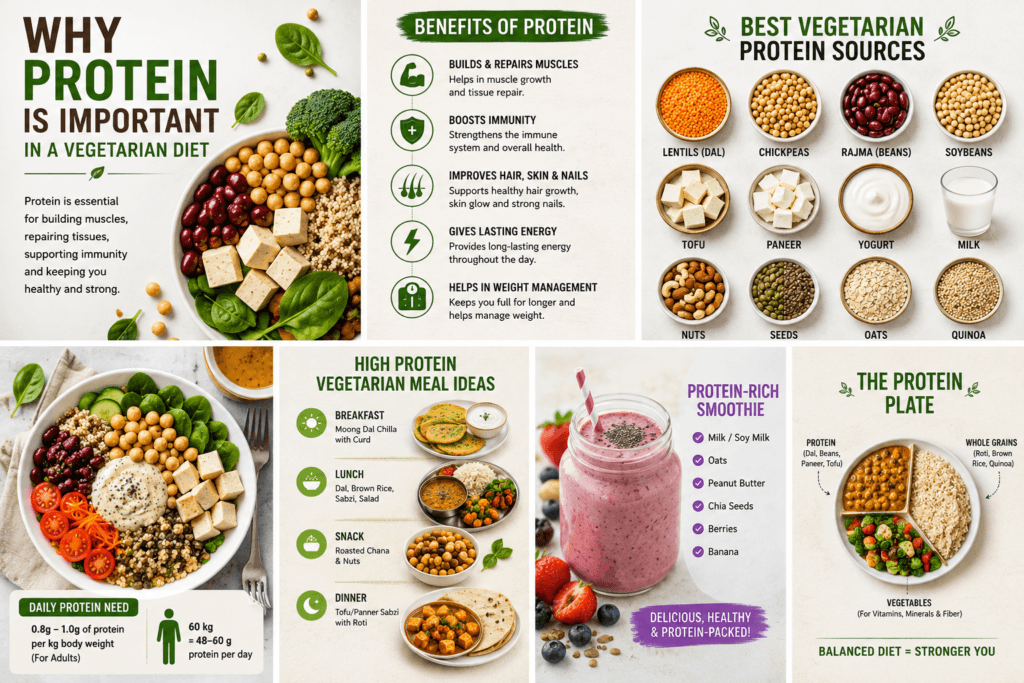
Protein helps our body maintain muscles and tissues and is involved in the production of enzymes, hormones, and many other important molecules.
In simple words, protein helps our body build, maintain, and repair itself.
That made me look at my everyday meals differently.
I started noticing the protein sources that were already present in a vegetarian kitchen.
A bowl of dal.
A plate of rajma chawal.
A bowl of chole.
Some paneer.
A serving of tofu.
A glass of milk.
A bowl of curd.
Some roasted chana.
A handful of nuts and seeds.
These foods may look simple, but together they can make an important contribution to our daily protein intake.
That’s when I realized something:
Protein was not just a gym nutrient. It was a part of everyday nutrition.
I Started Looking at My Body Differently
To understand protein better, I started imagining my body like a house.
Think about a house.
It needs regular maintenance.
Sometimes something needs to be repaired.
Sometimes something needs to be replaced.
And different parts of the house need different materials to keep everything working properly.
Our body is not very different.
Every day, our body is working, repairing, maintaining, and replacing cells and tissues.
Protein provides amino acids that the body uses to build and maintain tissues and make important molecules.
That is why protein is often described as one of the body’s essential building blocks.
This simple idea helped me understand why protein should have a place in my everyday diet.
"But I Eat Vegetarian Food Every Day..."
This was something I used to tell myself.
“I eat vegetables every day. I eat roti and rice. I eat fruit. Isn’t that enough?”
My diet wasn’t necessarily unhealthy.
But when I started looking closely at it, I realized that protein wasn’t getting enough attention.
My breakfast was often tea and toast.
Sometimes poha.
Sometimes a paratha.
Lunch could be roti, sabzi, and rice.
Dinner was often roti and sabzi again.
There was nothing wrong with enjoying these foods.
But I realized that I wasn’t intentionally including a good protein source in many of my meals.
And I think this is something many people can relate to.
We often think about calories.
We think about carbohydrates.
We think about sugar.
We think about fats.
But how often do we stop and ask:
“How much protein am I getting?”
That question changed the way I planned my meals.
Does Protein Help With Weight Loss?
This was one of the questions I had when I started learning more about nutrition.
“If I eat more protein, will I lose weight?”
The answer wasn’t as simple as I expected.
Protein can help increase feelings of fullness and can support muscle maintenance during a calorie-controlled diet.
But protein itself isn’t a magic weight-loss food.
Weight management depends on the bigger picture:
- Total calorie intake
- Food quality
- Physical activity
- Sleep
- Portion sizes
- Overall lifestyle
So instead of asking:
“Which protein food will make me lose weight?”
I started asking myself:
“How can I build balanced meals that keep me nourished and satisfied?”
That felt like a much healthier way to think about food.
How Much Protein Do I Actually Need?
Once I started learning about protein, I became curious about the numbers.
I wanted to know:
“Exactly how much protein do I need every day?”
The answer depends on several factors, including body weight, age, physical activity, health status, and individual goals.
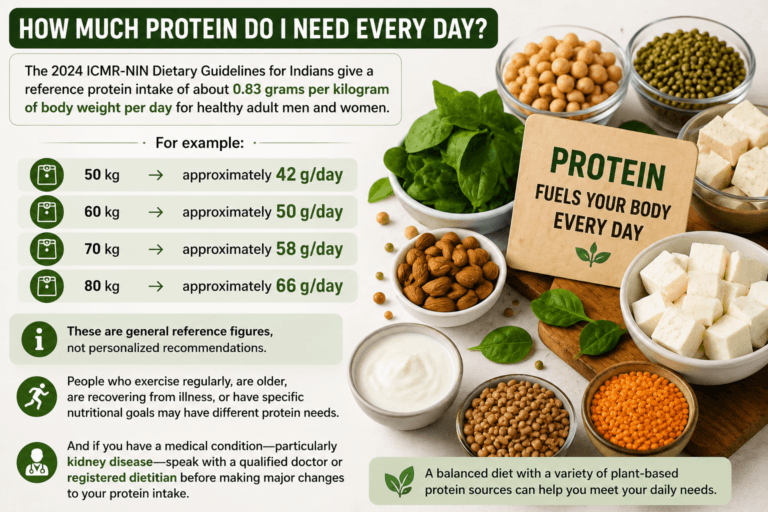
The ICMR-NIN recommendations give a reference protein intake of about 0.83 grams per kilogram of body weight per day for healthy Indian adults. Individual protein needs can vary depending on factors such as age, activity level, health status, and dietary pattern.
For example:
- 50 kg → approximately 42 g/day
- 60 kg → approximately 50 g/day
- 70 kg → approximately 58 g/day
- 80 kg → approximately 66 g/day
These are general reference figures, not personalized recommendations.
People who exercise regularly, are older, are recovering from illness, or have specific nutritional goals may have different protein needs.
And if you have a medical condition—particularly kidney disease—speak with a qualified doctor or registered dietitian before making major changes to your protein intake.
Source: ICMR-National Institute of Nutrition (ICMR-NIN), Dietary Guidelines for Indians 2024. View the official guidelines
disclaimer: These are general reference figures, not personalized recommendations.
Do I Really Need Protein Powder?
At one point, I started seeing protein powder everywhere.
Fitness videos.
Social media.
Gym posts.
And naturally, I wondered:
“Maybe I need protein powder too?”
But then I asked myself a better question:
“Do I actually need it?”
The answer was: not necessarily.
Protein powder can be convenient, especially for people who have difficulty meeting their protein needs through regular food.
But it isn’t mandatory.
I realized that I could get protein from foods that were already familiar to me:
Dal, Rajma, Chole, Tofu, Paneer, Yogurt, Milk, Nuts, Seeds, Whole grains….
Protein powder can be an option.
It isn’t a requirement for being healthy.
What My Vegetarian Day Looks Like
Once I stopped overthinking my diet, I created a simple routine.
Breakfast – Moong dal chilla with curd.
Mid-Morning – A fruit with a small serving of nuts.
Lunch – Dal, roti or rice, vegetables, and salad.
Evening Snack – Roasted chana or sprouts.
Dinner – Tofu or paneer with vegetables and whole-grain roti.
Optional Evening Food
Milk or yogurt, depending on my overall dietary needs.
Nothing extreme.
No complicated recipes.
No expensive ingredients.
Just a variety of nutritious foods.
And that simplicity made it much easier for me to stay consistent.
The Biggest Lesson I Learned
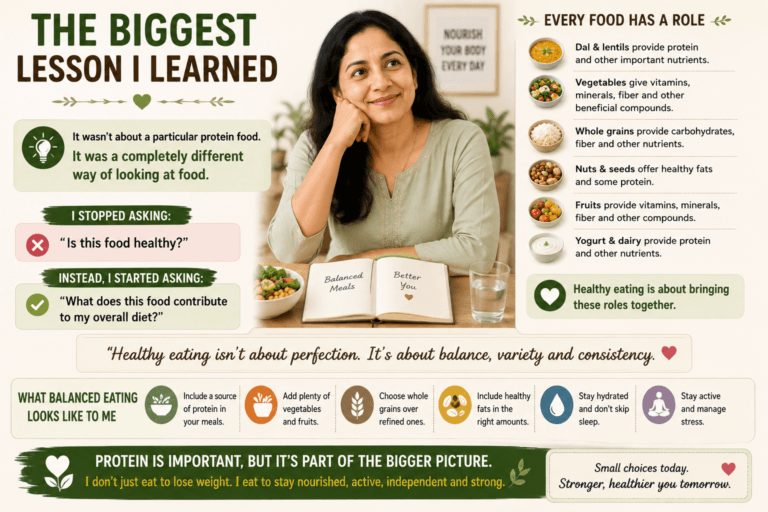
After spending more time learning about nutrition, I realized that the most important thing I had learned wasn’t a particular protein food.
It was a completely different way of looking at food.
I stopped asking:
“Is this food healthy?”
Instead, I started asking:
“What does this food contribute to my overall diet?”
A bowl of dal contributes protein.
Vegetables provide vitamins, minerals, fiber, and other beneficial compounds.
Whole grains provide carbohydrates, fiber, and other nutrients.
Nuts and seeds provide healthy fats and some protein.
Fruits provide vitamins, minerals, fiber, and other compounds.
Yogurt provides protein and other nutrients.
Every food can have a role.
Healthy eating is about bringing those roles together.
Protein Isn't the Whole Diet
This may actually be the most important lesson I learned.
Once I understood the importance of protein, it was tempting to become too focused on it.
Suddenly every meal could become:
“How much protein does this have?”
But a healthy diet is much bigger than protein.
My body also needs:
- Fiber
- Healthy fats
- Carbohydrates
- Vitamins
- Minerals
- Water
- A variety of whole and minimally processed foods
WHO describes a healthy diet around the principles of adequacy, balance, moderation, and diversity.
So I learned not to turn protein into another diet obsession.
I simply made it part of a balanced lifestyle
How I Build My Vegetarian Protein Plate
When I am confused about what a balanced vegetarian meal should look like, I keep it simple.
I imagine my plate.
First, I add a protein source: Dal / Rajma / Chole / Tofu / Paneer / Beans
Then I add vegetables: Seasonal vegetables or a salad
Then I add a carbohydrate or whole-grain source: Roti / Brown Rice / Oats / Millet / Other Whole Grains
And depending on my meal: Curd or another nutritious accompaniment
That’s it.
I don’t need a complicated formula.
I just need variety and balance.
10 Easy Ways to Add More Vegetarian Protein to Your Diet
If you also want to improve your protein intake, you don’t have to change everything at once.
Here are some of the simple changes that worked for me.
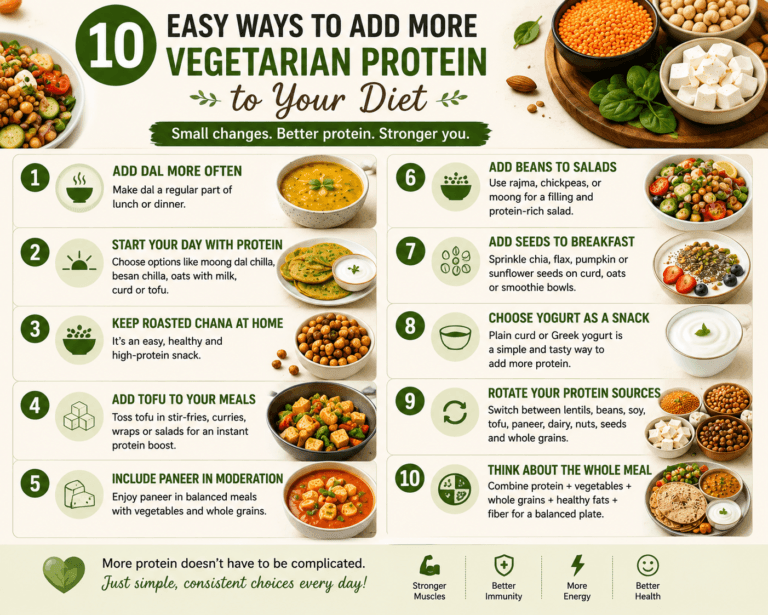
1. I Add Dal More Often
Make dal a regular part of lunch or dinner.
2. Start Your Day With Protein
Try moong dal chilla, besan chilla, yogurt, milk, tofu, or another protein-rich vegetarian breakfast.
3. Keep Roasted Chana at Home
It can be a convenient snack option.
4. Add Tofu to Vegetable Dishes
Turn an ordinary vegetable meal into a more protein-rich meal.
5. Include Paneer in Moderation
Use paneer in balanced meals with vegetables and whole grains.
6. Add Beans to Salads
Rajma, chickpeas, and other beans can make salads more filling.
7. Add Seeds to Breakfast
Sprinkle chia, flax, pumpkin, or sunflower seeds over yogurt or oats.
8. Choose Yogurt as a Snack
Plain yogurt can be an easy way to add protein to your day.
9. Rotate Your Protein Sources
Don’t eat the same food every day. Switch between lentils, beans, soy, tofu, paneer, dairy, nuts, seeds, and whole grains.
10. Think About the Whole Meal
Don’t just count protein.
Look at the entire meal.
Protein + vegetables + whole grains + healthy fats + fiber = a more balanced approach.
A Message I Would Give to Every Woman Over 40
If you’re a woman in your 40s, 50s, or beyond, I would say this:
Don’t focus only on losing weight. Focus on staying strong.
Don’t be afraid of protein just because you’re vegetarian.
Don’t assume that muscle loss is something you simply have to accept.
And don’t wait until you feel weak to start caring about your muscles.
Start with small things.
Add a protein source to your meals.
Stay active.
Include strength-building exercises that are appropriate for you.
Get enough sleep.
And if you’re unsure about your nutritional needs, especially during or after menopause, speak with a qualified doctor or registered dietitian.
Because getting older is natural.
You don’t have to simply accept a loss of strength as you get older.
And for me, that’s one of the biggest reasons why protein has become an important part of my vegetarian lifestyle.
I don’t want to eat just to weigh less.
I want to eat to stay nourished, active, independent, and strong.
Protein Is One Part of the Bigger Picture
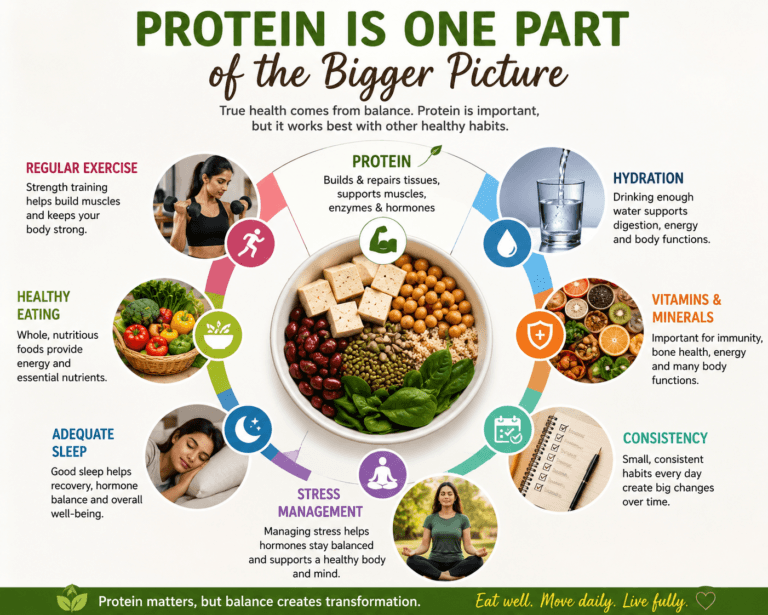
This is where protein became more meaningful to me.
I don’t look at protein as a “diet food” anymore.
I see it as one part of taking care of my body.
Protein provides amino acids that our body uses to maintain and repair tissues. But I also learned that protein alone cannot prevent age-related muscle loss. Maintaining muscle health involves regular physical activity—especially resistance or strength training—along with adequate nutrition and recovery.
A 2025 Indian consensus on sarcopenia recommends resistance exercise combined with appropriate nutrition, including adequate protein, as part of its management approach.
Research in postmenopausal women has also found that resistance training can improve measures of physical fitness and muscle strength.
So my approach became simple:
Eat well.
Get enough protein.
Move my body.
Build strength.
Take care of my health before a problem appears.
Sources:
• Kalra S, et al. An Indian Consensus on Sarcopenia: Epidemiology, Etiology, Clinical Impact, Screening, and Therapeutic Approaches (2025).
• González-Gálvez N, et al. Resistance training effects on healthy postmenopausal women: a systematic review with meta-analysis (2024).