
Table of Contents
ToggleWhat Is Pitru Paksha? Why Food Is Offered to Ancestors
Pitru Paksha is an important period in the Hindu tradition dedicated to remembering and honoring departed ancestors. It is traditionally observed through prayers, Shraddha rituals, food offerings, and acts of charity.
For many Indian families, Pitru Paksha is not only a religious observance but also a time to remember their roots and express gratitude toward the generations who came before them.
But what exactly is Pitru Paksha, why is it observed, and why is food offered to ancestors? Let’s understand the tradition in a simple way.
The word “Pitru” refers to ancestors, while “Paksha” means a fortnight or a period of approximately fifteen lunar days.
Pitru Paksha is observed during the waning phase of the Moon in the Hindu month of Bhadrapada/Ashwin, depending on the regional Hindu calendar. The exact dates change every year.
During this period, families remember their deceased parents, grandparents, and other ancestors and perform rituals known as Shraddha.
The specific customs can differ according to family traditions, region, and community.
Why Do We Observe Pitru Paksha?
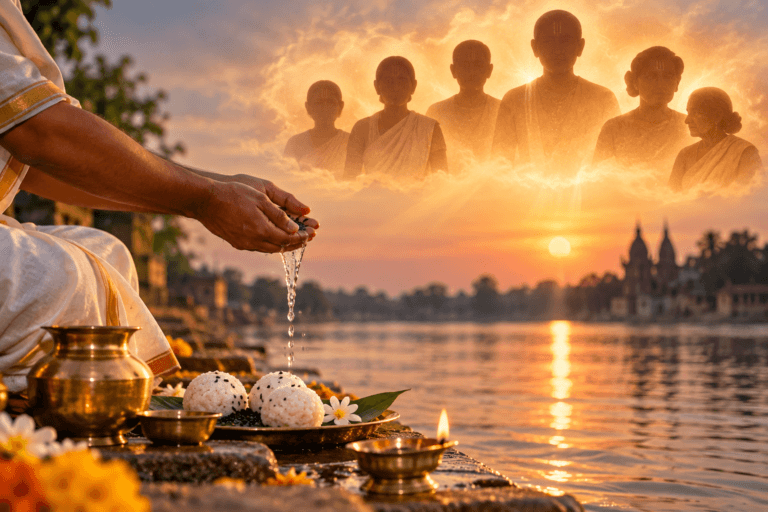
Pitru Paksha is a time to remember our departed parents, grandparents, and other ancestors. It reminds us of our family roots and the values passed down from one generation to another.
Offering food during Shraddha is considered a symbolic expression of love, gratitude, and respect for our ancestors. The food is prepared with care and offered as part of the traditional rituals.
What Food Is Traditionally Considered Important?
Food has a special place in Pitru Paksha and Shraddha rituals. Traditionally, the food prepared for ancestors is kept simple, fresh, vegetarian, and sattvik. The exact dishes can vary across India, as different regions and families follow their own customs.
1. Rice and Other Grains -
Rice is one of the most significant foods associated with Shraddha. It is commonly prepared as plain steamed rice and is also used in various ancestral rituals and offerings.
Other traditional grains such as wheat and barley (jau) are also mentioned in traditional practices. In some regions, these grains are used to prepare rotis, puris, or other simple preparations.
2. Dal and Pulses -
Simple dal is an important part of many Shraddha meals. Moong dal is a commonly preferred option because it is light and simple.
Depending on regional and family traditions, urad dal and other permitted pulses may also be used. Urad dal vada is important.. So you can make dahi vada. The dal is generally prepared without onion and garlic and with mild seasoning.
3. Seasonal Vegetables -
Fresh seasonal vegetables are commonly included in the Shraddha meal. Depending on the region and family tradition, vegetables such as:
- Galka / Gilke
- Dodka / Ridge Gourd
- Shirali
- Padwal / Snake Gourd
- Gawar / Cluster Beans
- Karela / Bitter Gourd
- Pumpkin
- Okra / bhindi
- Raw Banana
- Leafy seasonal vegetables
- Green moong
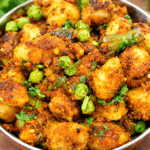
may be prepared. The vegetables are generally cooked simply, satvik, suing fresh coconut… without excessive spices, onion, or garlic, tomato..
4. Puri and Simple Breads -
Puri is included in Shraddha meals in many parts of India. In some regions, families may instead prepare roti, chapati, or other traditional breads according to their customs.
The important point is that the food is freshly prepared and kept simple.
5 . Kheer and Traditional Sweets -
Rice kheer is one of the most widely recognized traditional sweets associated with religious and ceremonial meals. It is prepared with rice, cow milk, and sugar or jaggery.
Depending on the region, families may also prepare other simple traditional sweets such as halwa, payasam, or other cow milk and grain based preparations.
6. Cow Milk, Curd, Paneer and Ghee -
Cow Milk, curd, paneer and ghee have traditionally been valued ingredients in Hindu ritual food. They may be included in the Shraddha meal or used in offerings, depending on family customs.
7. Sesame and Other Ritual Ingredients -
Black sesame (kala til) has a particularly important role in ancestral rituals. It is traditionally associated with Tarpan and other offerings to the ancestors.
Rice and sesame are also used together in certain Shraddha rituals. These ingredients therefore have significance beyond simply being part of the meal.
8. Fruits and Seasonal Foods -
Fresh seasonal fruits are also commonly offered during Shraddha. The choice of fruit depends on the season, region, availability, and family tradition.
The emphasis is generally on fresh, clean, and wholesome food rather than elaborate or heavily processed dishes.
9. Chutney, papad -
Amla Chutney, aamsol/kokum se prepared traditional chutney, Rice Papad
A Simple Traditional Pitru Paksha Meal
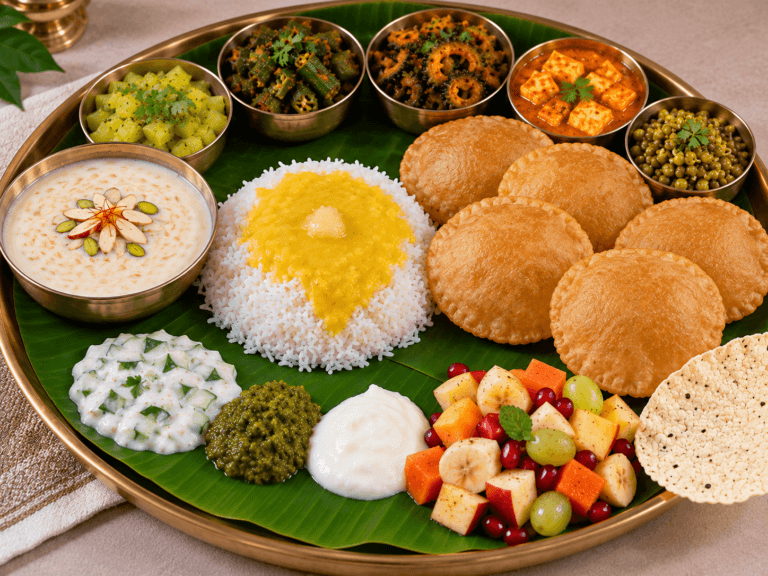
A traditional Shraddha meal may include:
Plain Rice + Moong Dal/Varan + Seasonal Vegetable + Puri + Rice Kheer + Curd + Ghee + Seasonal Fruit + Dahi vada (urad dal) +panchamtrut + Aamla chutney + Cucumber rita + papad (rice)
The exact menu can be different from one part of India to another. For example, a family in North India may prepare a different combination from a family in Maharashtra, South India, Bengal, or another region.
What Is Generally Avoided?
During Shraddha, many families traditionally AVOID:
Meat, fish and eggs
Onion and garlic
Alcohol
Stale or leftover food
Excessively spicy or heavily processed food
- Chana dal, Sattu, Brinjal, Rajma, masoor dal (red lentils), kala jeera, mustard seeds, hing, mushrooms, tomato, cabbage, cauliflower, Singhada (Water Chestnut ), kulith, flax seeds
- mustard oil
- Root Vegetables: Vegetables that grow underground—such as potato , radish, carrot, turnip, beetroot, and taro root (arbi)—are restricted
Some families also avoid particular vegetables, pulses, spices, or grains. These restrictions are not identical across all Indian traditions, so it is best to follow one’s family or regional customs.
For Pitru Paksha, it is best to choose fresh, seasonal Indian vegetables and fruits that are traditionally used in Indian households. Avoid using exotic or imported vegetables and fruits that are not part of traditional Indian food practices.
Is the Food Really Meant for the Ancestors?
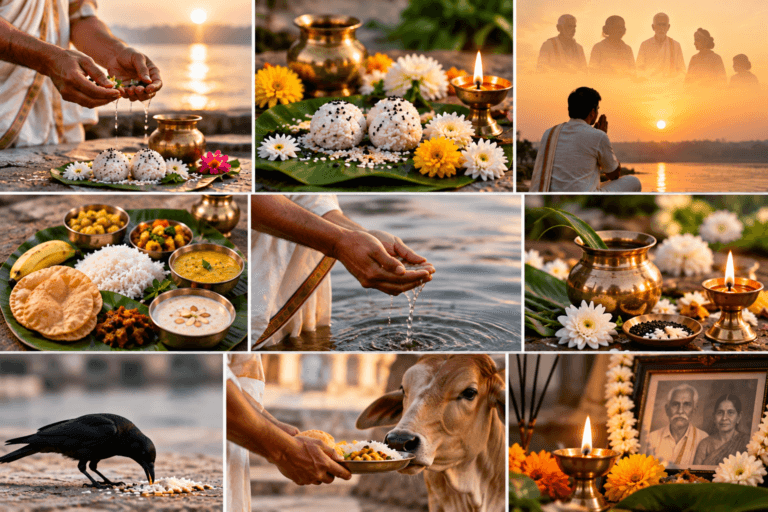
During Shraddha, portions of the prepared food are traditionally set aside for different recipients. The Pitru offering is made through rituals such as Pinda and Tarpan for the ancestors. Food is also offered to a Brahmin or respected guest, while traditional Panchabali may include portions for a cow (Go-bali), dog (Shwana-bali), crow (Kaka-bali), and other living beings such as ants, depending on the tradition followed. The crow is traditionally associated with the ancestors, while feeding animals represents sharing and respect for all forms of life. These practices vary across regions and families, so the specific procedure should follow one’s family tradition or the guidance of the priest performing the Shraddha.
Pitru Paksha is ultimately a period of remembrance, gratitude, and respect. Through prayers, food offerings, and acts of charity, families honor those who came before them.
The traditional food prepared during this period is kept simple and sattvik, with ingredients such as rice, sesame, milk, ghee, barley, moong dal, fruits, and seasonal vegetables holding an important place in many traditions.
Most importantly, families should follow their own ancestral and regional customs, as Pitru Paksha practices are not exactly the same everywhere.