Table of Contents
ToggleSoft & Colourful Chana Idli & Coconut Chutney
There’s something deeply comforting about starting the day with a warm, homemade breakfast, and these Chana Idlis are the perfect way to do just that.
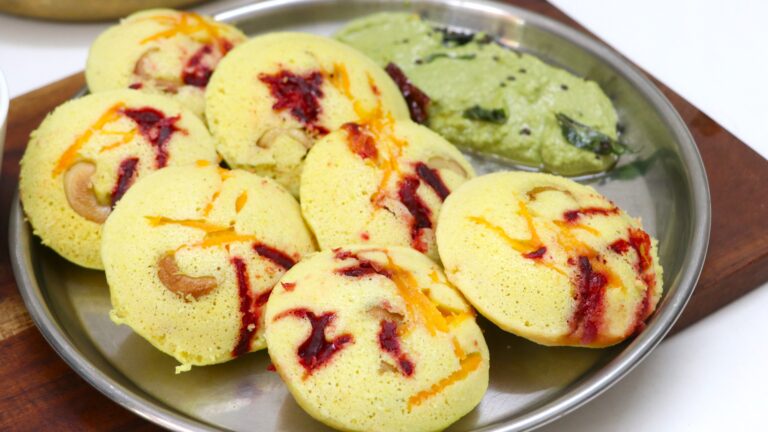
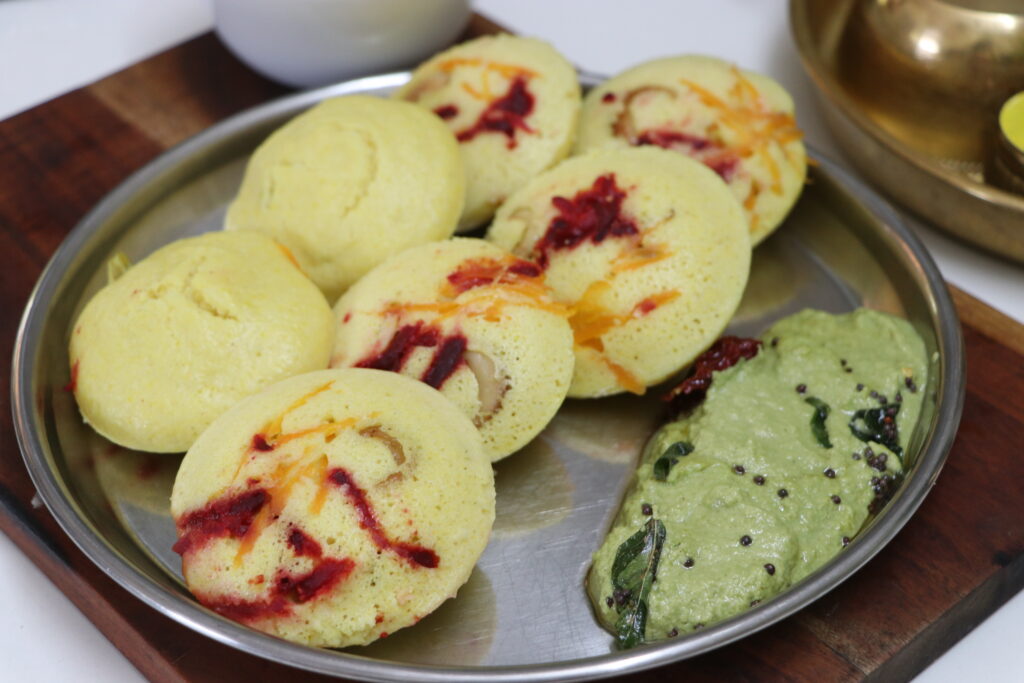
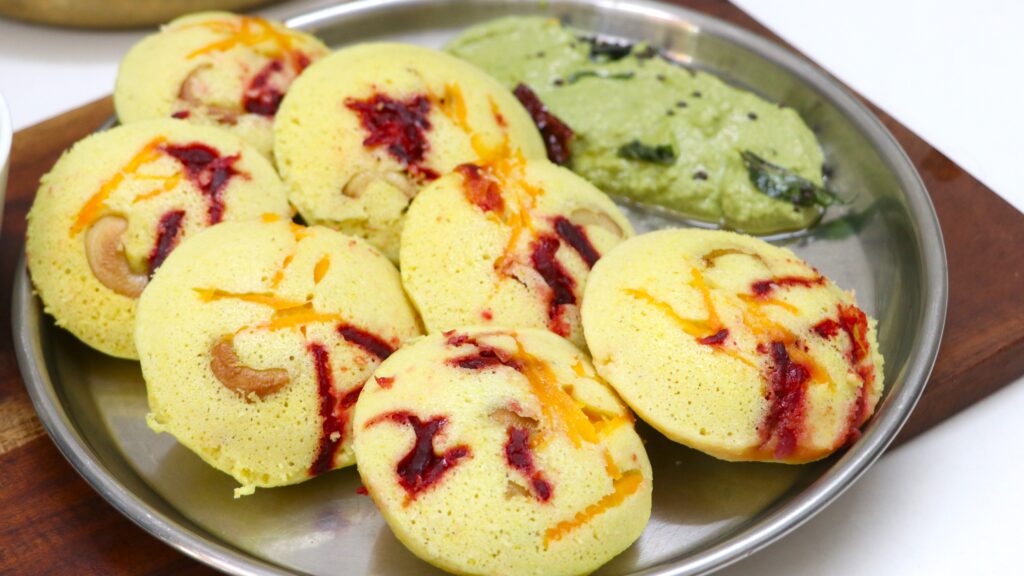
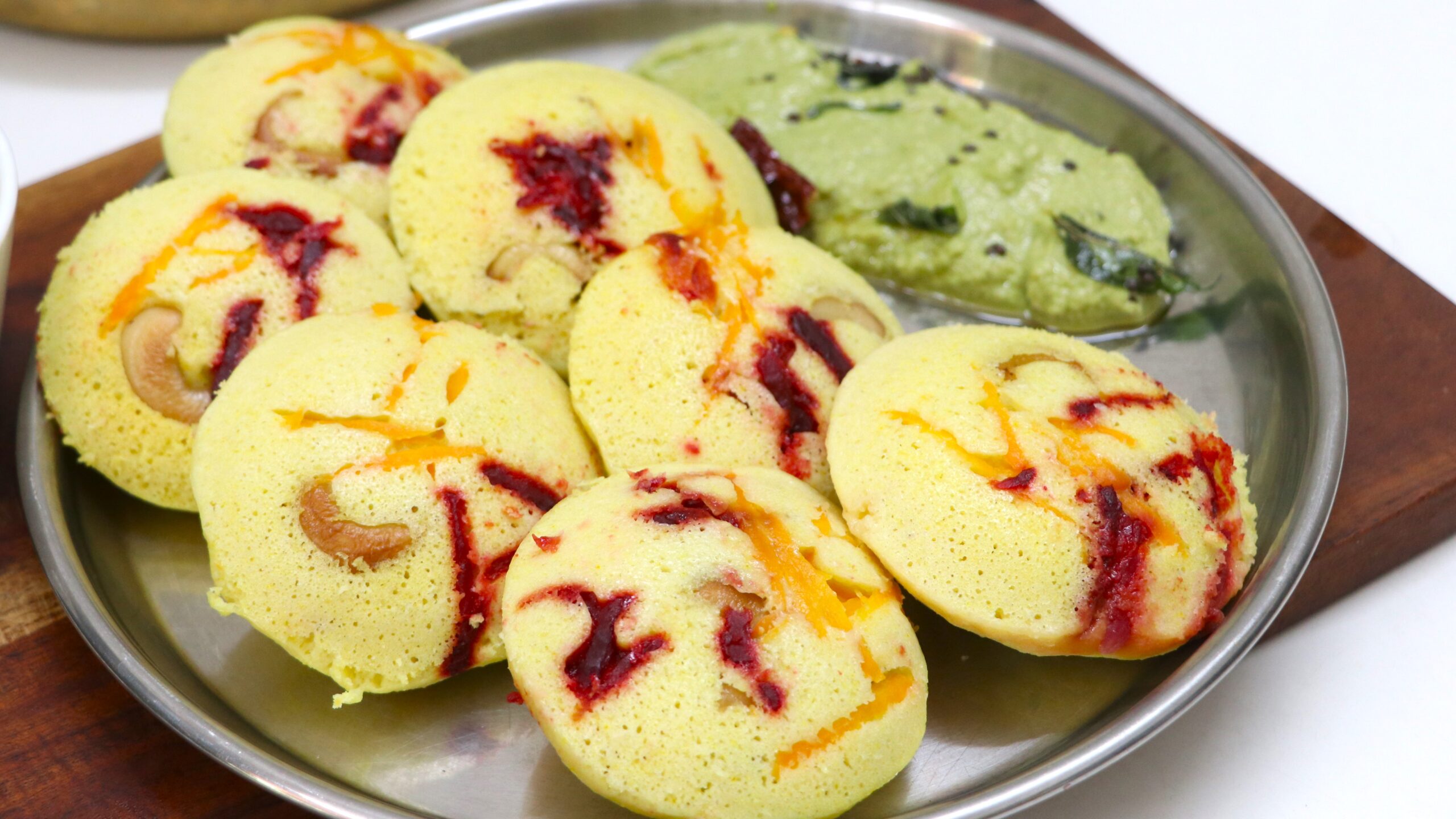
Made with the goodness of chana dal, rice, and urad dal, these idlis are soft, fluffy, protein-rich, and naturally filling. What makes them extra special is the beautiful touch of grated carrot, beetroot, and a golden fried cashew in the centre — making each idli look as delightful as it tastes.
Paired with a fresh coconut-coriander chutney, this breakfast feels light yet satisfying, healthy yet indulgent. It’s the kind of traditional recipe that brings both nourishment and warmth to the table.
Perfect for breakfast, brunch, or even a light evening meal, this recipe is a wonderful twist on classic idlis.
Let’s begin.
Why You'll Love This Chana Dal Idli
- Soft and fluffy texture
- Made with wholesome dals and rice
- Beautiful natural colour from carrot and beetroot
- Easy to prepare ahead
- Perfect for breakfast or brunch
- Delicious with coconut chutney and sambar
- A fun variation of traditional idli
- Great for serving to family and guests
Video
Ingredients
For the Idli Batter
- 1 cup chana dal
- 1 cup rice
- ⅓ cup urad dal
- ⅛ tsp fenugreek seeds
- 1 tsp green chili and ginger paste
- ¼ tsp sugar
- ¼ tsp turmeric powder
- Salt to taste
- 1 tsp Sugar
- Water as required
- Grated carrot
- Grated beetroot
- Fried cashews
- Oil or ghee for greasing
For the Coconut Chutney
- ¼ cup fresh coconut
- ¼ cup fresh coriander leaves
- 1 green chili
- 1 small piece ginger
- 6 cashews
- Salt to taste
- ¼ tsp sugar
- 1 tbsp curd
- Water as required
Method
Step 1 - Soak the Dal and Rice
- Firstly, add 1 cup chana dal, 1 cup rice, ⅓ cup urad dal and ⅛ teaspoon fenugreek seeds to a large bowl.
- Then wash everything thoroughly 2–3 times under running water.
- Add enough water to completely cover the dal and rice.
- Allow the mixture to soak for 4–5 hours.
- Proper soaking is important because it helps the dals and rice grind smoothly and contributes to soft idlis.
Step 2 - Grind the soaked dal & rice
- After soaking, drain the water completely.
- Transfer the soaked mixture to a blender or mixer grinder.
- Add a little water and grind until you get a smooth, fine batter.
- Do not add too much water at once. Add it gradually as needed.
- Transfer the batter to a large bowl.
- Whisk the batter for 1–2 minutes. This helps incorporate some air into the batter.
Step 3 - Ferment the Batter
- Cover the bowl and keep it in a warm place.
- Allow the batter to ferment for approximately 7–8 hours or overnight.
- The fermentation time can vary depending on the temperature.
- After fermentation, the batter should look slightly risen and airy.
Tip for Cold Weather :
If your kitchen is cold, place the covered batter in a warm place or inside an oven with only the light switched on.
Do not turn on the oven while the batter is inside.
Step 4 - Prepare the Fermented Batter
- Once the batter has fermented, gently stir it.
- Next add 1 teaspoon green chilli and ginger paste, 1 teaspoon sugar, ¼ teaspoon turmeric powder, Salt to taste.
- Mix gently until everything is well combined.
- If the batter looks too thick, add a little water.
- The final batter should have a consistency similar to regular idli batter — thick but pourable.
Step 5 - Prepare the Idli Mould
- Lightly grease the idli moulds with oil or ghee.
- Place a small amount of grated carrot and grated beetroot in the centre of each mould.
- Place one fried cashew on top of the vegetables.
- This simple step gives the idlis their beautiful colourful appearance.
Step 6: Fill the Idli Moulds
- Give the batter a gentle stir.
- Now pour the batter into each idli mould, making sure the carrot, beetroot and cashew are covered.
- Do not fill the moulds completely because the idlis will expand while steaming.
Step 7: Steam the Idlis
- Preheat the steamer by bringing the water to a boil.
- Place the idli stand inside the steamer.
- Cover with a lid and steam over medium heat for approximately 15–20 minutes.
- To check whether the idlis are cooked, insert a toothpick or knife into the centre.
- If it comes out clean, the idlis are ready.
- Remove the idli stand from the steamer and allow the idlis to rest for 3–5 minutes.
- Gently remove the idlis from the moulds using a spoon or idli remover.
- Your soft and colourful chana dal idlis are ready!

Coconut Chutney
- While the idlis are steaming, prepare the chutney.
- In a mixer jar, add fresh coconut – 1/4 cup, coriander leaves – 1/4 cup, 1 green chili , 1 small piece ginger, cashews 6, salt as per taste, 1/4 tsp sugar and add 1 tbsp curd into.
- Add a little water and grind into a smooth chutney.
- Now transfer it to a bowl.
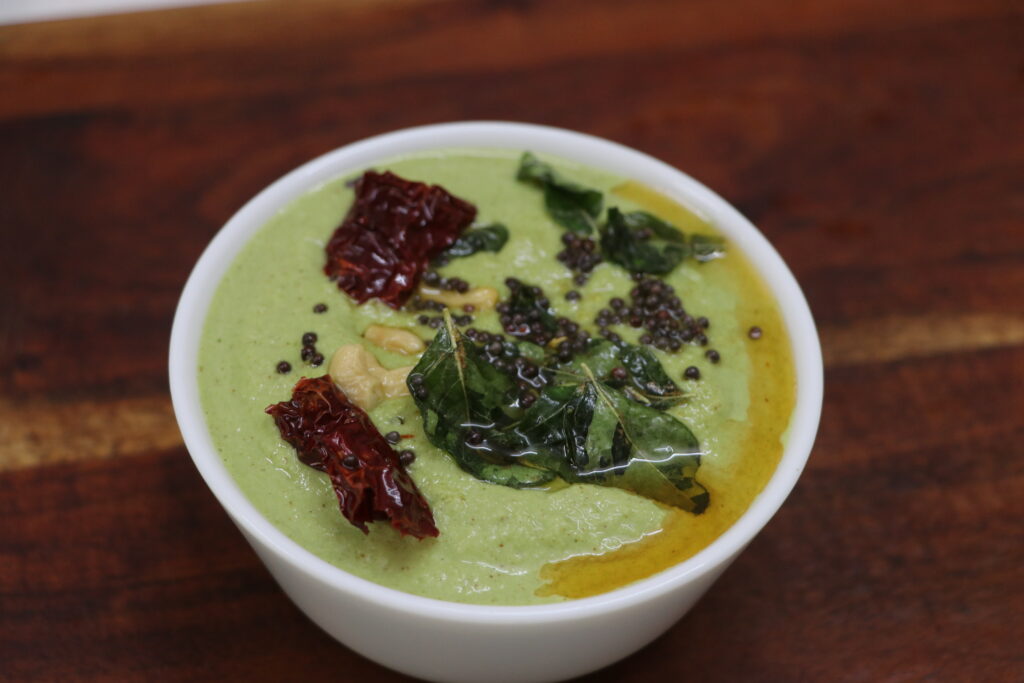
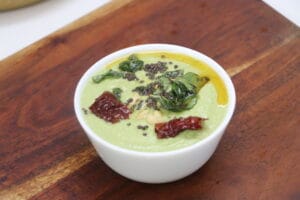
- For extra flavour, you can optionally add a tempering of: mustard seeds , curry leaves and red chili. This gives the chutney a lovely aroma.

Serving Suggestions
Serve these Chana Dal Idlis warm with fresh coconut-coriander chutney.
For a complete South Indian-style breakfast, serve them with: Coconut chutney, Sambar, Idli podi, Tomato chutney, Peanut chutney. They also make a wonderful light evening meal.
Storage & Reheating
Storing the Idlis
Allow leftover idlis to cool completely before placing them in an airtight container.
Refrigerate and consume within 1–2 days for the best taste and texture.
Reheating
Steam refrigerated idlis for a few minutes until warm and soft again.
Avoid overheating them for too long, as this can make the idlis dry.
Storing Chutney
Store leftover coconut chutney in an airtight container in the refrigerator and use it within a day for the freshest flavour.

Tips
1. Soak the ingredients properly
Do not reduce the soaking time too much. Properly soaked dal and rice are easier to grind and help create a softer texture.
2. Fermentation is important
Good fermentation is one of the most important steps for fluffy idlis. Give the batter enough time to ferment, especially during cooler weather.
3. Keep the batter thick but pourable
A batter that is too thin can result in flat or dense idlis. Adjust the consistency gradually with water.
4. Do not over-grind with too much water
Add water little by little while grinding. You can always add more water later, but it is difficult to correct an overly thin batter.
5. Do not overfill the moulds
Leave some space because the batter expands during steaming.
6. Let the idlis rest before demoulding
Allowing them to rest for a few minutes after steaming makes them easier to remove without breaking.
7. Get creative with vegetables
Instead of carrot and beetroot, you can experiment with: Spinach, Sweet corn, Finely chopped capsicum, Grated zucchini
Recipe Card

Soft & Colourful Chana Dal Idli
Ingredients
Idli
- 1 cup Chana dal
- 1 cup Rice
- 1/3 cup Urad dal
- 1/8 tsp Fenugreek seeds
- 1 tsp Green chili and ginger paste
- 1/4 tsp Sugar
- 1/4 tsp Turmeric Powder
- Salt to taste
- 1 tsp Sugar
- Water as required
- Grated carrot
- Grated beetroot
- Fried cashews
- Oil or ghee for greasing
For the Coconut Chutney
- 1/4 cup Fresh coconut
- 1/4 cup Fresh coriander leaves
- 1 no Green chili
- 1 small piece Ginger
- 6 nos Cashews
- Salt to taste
- 1/4 tsp Sugar
- 1 tbsp Curd
- Water as required
Instructions
Soak the lentils and rice
- In a large bowl, combine chana dal - 1 cup, rice - 1 cup, urad dal - 1/3 cup, fenugreek seeds - 1/8 tsp.
- Wash everything thoroughly 2–3 times with water.
- Now add enough water to soak the mixture completely.
- Let itsoak for 4–5 hours. This soaking step helps create soft and fluffy idlis.
Grind the batter
- Once soaked, drain the water and transfer the mixture to a mixer jar.
- Add a little water and grind into a smooth, fine batter. Then transfer the batter to a large bowl.
- Whisk it well for a minute or two to incorporate air.
- Cover the bowl and let it ferment overnight or for 7–8 hours in a warm place.
- This fermentation step gives the idlis their soft texture.
Prepare the batter for steaming
- The next morning, check the batter — it should look slightly risen and airy.
- Now add green chili and ginger paste - 1 tsp, sugar - 1 tsp, turmeric powder 1/4 tsp and salt as per taste.
- Mix everything well.If needed, add a little water to adjust the consistency.
- The batter should be smooth and similar to regular idli batter — thick yet pourable.
Prepare the idli moulds
- Grease the idli moulds lightly with oil or ghee.
- Now add a little grated carrot and grated beetroot in the centre of each mould.
- Place one fried cashew in the middle. This makes the idlis look colourful, festive, and beautiful.
Fill and steam
- Mix the batter once again. Pour the batter into each mould, covering the vegetables and cashew.
- Place the moulds into a preheated steamer.
- Cover with a lid and steam for 15–20 minutes.
- To check doneness, insert a toothpick — it should come out clean.
- Once done, let the idlis cool for a few minutes before demoulding.

Now Prepare Coconut Chutney
- While the idlis are steaming, prepare the chutney.
- In a mixer jar, add fresh coconut - 1/4 cup, coriander leaves - 1/4 cup, 1 green chili , 1 small piece ginger, cashews 6, salt as per taste, 1/4 tsp sugar and add 1 tbsp curd into.
- Add a little water and grind into a smooth chutney.
- Now transfer it to a bowl.
- For extra flavour, you can optionally add a tempering of: mustard seeds , curry leaves and red chili. This gives the chutney a lovely aroma.

Video
Notes
FAQs
Traditional fermentation gives these idlis their characteristic soft texture and flavour. For the best results, fermentation is recommended.
Soak the chana dal, rice, urad dal and fenugreek seeds together for approximately 4–5 hours.
Hard idlis can happen because of insufficient soaking, inadequate fermentation, a batter that is too thick, or over-steaming. Make sure the batter is properly fermented and has a thick but pourable consistency.
Yes. The batter can be prepared and left to ferment overnight. Once fermented, keep it refrigerated if you are not using it immediately.
The batter should look slightly risen, airy and lighter than before fermentation. You may also notice small bubbles on the surface.
Yes, you can make the idli without fenugreek seeds, although a small amount can help with fermentation and flavour.
Yes. Fresh coconut gives the best flavour, but frozen grated coconut can also be used. Thaw it before grinding.
Simply add a little water while grinding until you reach your preferred consistency.
Absolutely. The cashew is mainly used for presentation and flavour. You can skip it if you prefer.
Yes. You can use grated carrot, beetroot, spinach, sweet corn or finely chopped capsicum to create different colours and textures.