Ghevar Recipe | Traditional Rajasthani Ghevar with Rabdi (Halwai Style)

Ghevar Recipe | Traditional Rajasthani Ghevar with Rabdi (Halwai Style)

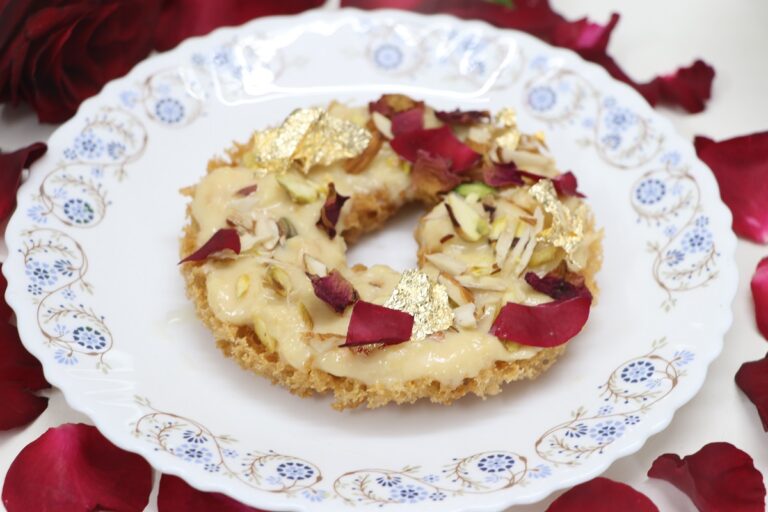
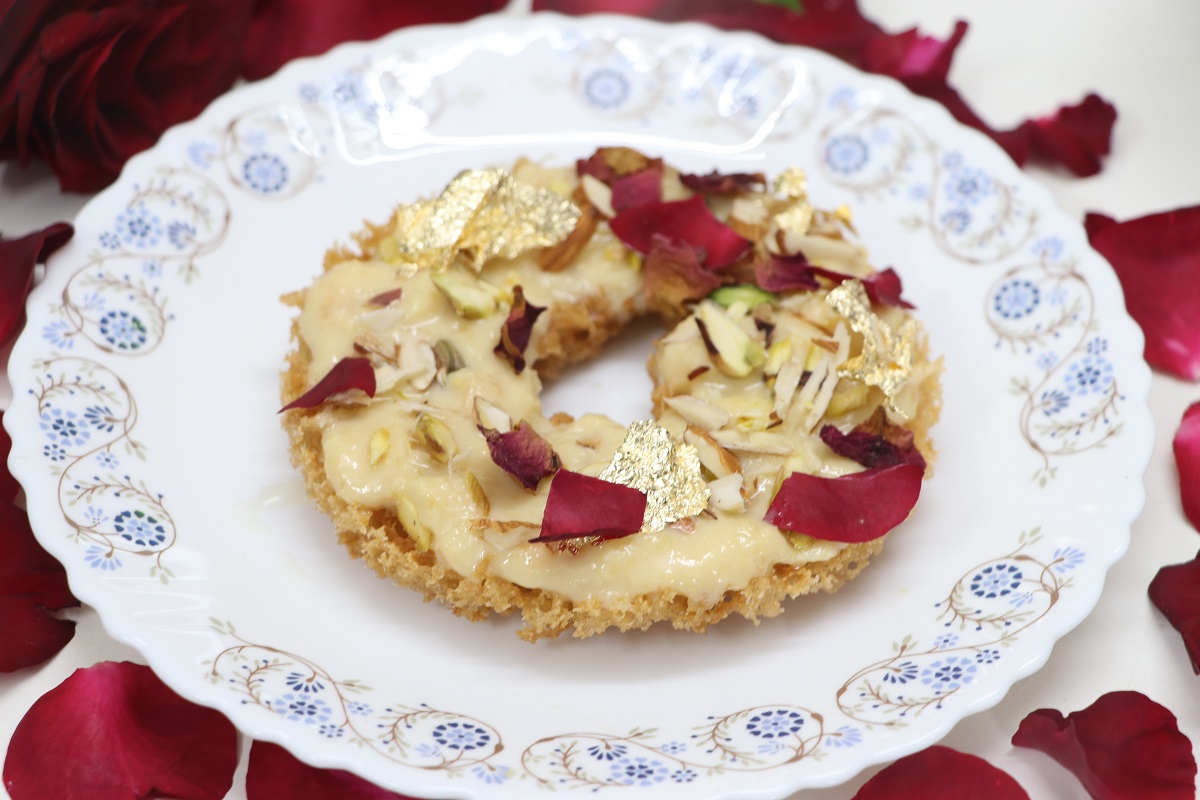
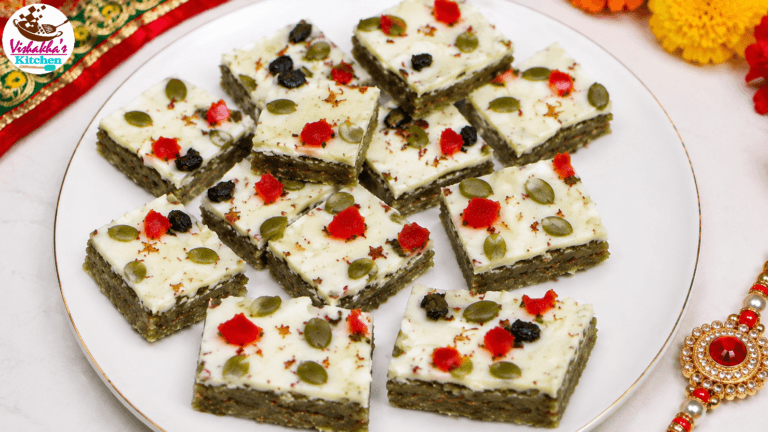
No celebration of Raksha Bandhan or Teej feels complete without a plate of crispy, syrup-soaked Ghevar. This iconic Rajasthani sweet is famous for its delicate honeycomb texture, rich saffron sugar syrup, and generous topping of creamy rabdi, crunchy nuts, and fragrant rose petals. Every bite is a beautiful combination of crispness, sweetness, and richness that has made Ghevar one of India’s most loved festive desserts.

Although Ghevar may seem difficult to prepare, it’s surprisingly achievable at home when you understand a few important techniques. The secret lies in preparing a very thin, chilled batter and pouring it slowly into hot oil to create its signature lace-like honeycomb pattern. Once soaked in aromatic sugar syrup and topped with thick rabdi, the result is every bit as delicious as the famous halwai-style Ghevar.

Whether you’re preparing sweets for Raksha Bandhan, Teej, Janmashtami, or any festive gathering, this authentic recipe will help you recreate the magic of traditional Rajasthani Ghevar in your own kitchen.

Why You'll Love This Recipe

  • Authentic halwai-style Ghevar.
  • Crispy honeycomb texture.
  • Made with simple pantry ingredients.
  • Perfect for Raksha Bandhan, Teej, and festive celebrations.
  • Beautiful homemade dessert that looks impressive.
  • Delicious with or without rabdi.

Video

Ingredients

For the Ghevar Batter

  • 3 teaspoons ghee
  • 3–4 ice cubes
  • 1¼ cups all-purpose flour (maida)
  • Chilled water, as required
  • A few drops of fresh lemon juice

For the Sugar Syrup

  • 1 cup sugar
  • ¾ cup water
  • 2 green cardamoms, lightly crushed
  • 1 pinch saffron strands

For Frying

  • Oil or ghee, as required

For Garnishing

  • 1 cup thick rabdi
  • Chopped almonds
  • Chopped pistachios
  • Dried rose petals
  • Edible silver leaf (optional)

Method

Step 1: Prepare the Batter

  1. In a large mixing bowl, add the ghee 3 tsp and ice cubes.
  2. Whisk continuously using your hands or a whisk until the ghee becomes soft, creamy, and almost white in color. The ice helps keep the ghee cold while incorporating air, which is one of the secrets to achieving a crisp and light Ghevar.
  3. Once the ghee becomes creamy, remove the ice cubes.
  4. Add the all-purpose flour – 1& 1/4 cup  and mix thoroughly so that every grain of flour is evenly coated with the ghee.
  5. Now gradually add chilled water while whisking continuously. Add the water little by little to avoid lumps and create a smooth batter.
  6. Squeeze in a few drops of fresh lemon juice. This helps make the Ghevar crispier.
  7. Continue adding chilled water until you get a very thin batter, similar to the consistency of buttermilk.
  8. For the smoothest texture, strain the batter through a fine sieve.
  9. Transfer the batter to a squeeze bottle or sauce bottle and refrigerate it until ready to use. Keeping the batter cold is essential for creating the beautiful honeycomb structure.

Step 2: Prepare the Sugar Syrup

  1. In a saucepan, combine the sugar – 1 cup, water – 3/4 cup, crushed cardamom – 1/8 tsp, and a pinch of saffron. Cook over medium heat until the sugar dissolves completely.
  2. Allow the syrup to simmer gently for another 1–2 minutes. The syrup should be lightly sticky but not thick.
  3. Ghevar absorbs a light syrup much better than a one-string syrup.
    Keep the syrup warm until needed.

Step 3: Fry the Ghevar

  1. Heat enough oil or ghee in a deep, narrow kadai.
  2. The oil should be hot but not smoking.
  3. Place a Ghevar ring mold or a round steel stand in the center of the kadai.
  4. Shake the chilled batter bottle well before pouring.
  5. Slowly pour a thin stream of batter into the center of the mold from a little height. As the batter touches the hot oil, it immediately spreads and forms tiny holes.
  6. Pause for a few seconds before pouring the next batch of batter. Continue this process gradually until the Ghevar reaches the desired thickness.
  7. While frying, carefully spoon hot oil over the top to help cook the upper surface evenly.
  8. Once the Ghevar turns a light golden brown, carefully loosen the edges, remove the mold, and gently lift out the Ghevar.
  9. Drain the excess oil on a wire rack or absorbent paper.
  10. Repeat the same process with the remaining batter.

Step 4: Assemble the Ghevar

  1. There are two ways to sweeten the Ghevar. Briefly dip it into the warm sugar syrup, or Place it on a serving plate and pour the syrup evenly over the top.
  2. Once the syrup has been absorbed, generously spread thick chilled rabdi over the Ghevar.
  3. Garnish with chopped almonds, pistachios, dried rose petals, and edible silver leaf for a beautiful festive presentation.
  4. Our authentic Rajasthani Ghevar with Rabdi is now ready to serve.

Serving Suggestions & Storage Tips

Ghevar is traditionally served during: Raksha Bandhan, Hariyali Teej, Janmashtami, Diwali, Special family celebrations, Festive dessert platters..Serve chilled or at room temperature with plenty of fresh rabdi.

  • Plain Ghevar can be stored in an airtight container for 4–5 days at room temperature.
  • Refrigerate rabdi separately and assemble just before serving.
  • Once topped with rabdi, consume within 24 hours for the best taste and texture.

Making Traditional Rajasthani Ghevar at home is a rewarding experience that brings the authentic flavors of festive Rajasthan straight to your kitchen. With its delicate honeycomb texture, fragrant saffron syrup, and luxurious layer of creamy rabdi, this timeless dessert is truly the star of celebrations like Raksha Bandhan and Teej. While the technique requires a little patience, following the right batter consistency and frying method will reward you with beautifully crisp, halwai-style Ghevar every time. Prepare this festive sweet for your loved ones and make every celebration even more memorable with a homemade dessert that’s as beautiful as it is delicious.

Ghevar

Tips

  • The batter should be very thin, almost like buttermilk.
  • Always use chilled batter for the crispiest texture.
  • Strain the batter before frying to remove any lumps.
  • Pour the batter slowly in batches to create the signature honeycomb pattern.
  • The oil must be hot but not smoking.
  • Spoon hot oil over the Ghevar while frying for even cooking.
  • Fry only until light golden; over-frying can make the Ghevar hard.
  • Add the rabdi just before serving to keep the Ghevar crisp.

Recipe Card

ghevar

Traditional Rajasthani Ghevar with Rabdi | Halwai Style Ghevar Recipe

Ghevar is aclassic Rajasthani festive sweet, especially loved during RakshaBandhan and Teej. With its crisp honeycomb texture soaked in sugar syrupand topped generously with creamy rabdi, dry fruits, and rose petals, ghevar istruly a celebration on a plate.
Prep Time 30 minutes
Cook Time 45 minutes
Rest time 15 minutes
Total Time 1 hour 30 minutes
Course Dessert
Cuisine Indian
Servings 4
Calories 420 kcal

Ingredients
  

  • 3 tsp Ghee
  • 3 - 4 Ice Cubes
  • 1 & 1/4 cup All purpose flour
  • Chilled water
  • small piece Lemon
  • Oil or Ghee to fry

For Sugar Syrup

  • 1 cup Sugar
  • 3/4 cup Water
  • 2 nos Green cardamom
  • 1 pinch Saffron

For Topping

  • 1 cup Rabdi
  • 2 tbsp Chopped dry fruits
  • Driedrose petals
  • Driedrose petals

Instructions
 

Prepare the Ghevar Batter

  • In a large bowl, whisk the ghee with ice cubes until it becomes soft, creamy, and almost white. Remove the ice cubes.
  • Add the all-purpose flour and mix until the flour is well coated with the ghee.
  • Gradually add chilled water while whisking continuously to make a smooth, lump-free batter.
  • Add a few drops of lemon juice and continue mixing.
  • Strain the batter through a fine sieve.
  • The batter should be very thin, similar to buttermilk.
  • Transfer the batter to a squeeze bottle and refrigerate until ready to use.

Prepare the Sugar Syrup

  • In a saucepan, combine sugar, water, crushed cardamom, and saffron.
  • Cook over medium heat until the sugar dissolves completely.
  • Simmer for 1–2 minutes until slightly sticky. Do not make a one-string syrup.
  • Keep the syrup warm.

Fry the Ghevar

  • Heat oil or ghee in a deep kadai.
  • Place a ghevar mold or steel ring in the center.
  • Shake the chilled batter well.
  • Pour the batter slowly into the center in a thin stream, pausing between each addition.
  • Continue layering the batter until the ghevar reaches the desired thickness.
  • Spoon hot oil over the top while frying.
  • Cook until light golden brown.
  • Carefully remove the mold and lift out the ghevar.
  • Drain excess oil on a wire rack.
  • Repeat with the remaining batter.

Assemble the Ghevar

  • Dip the ghevar briefly in warm sugar syrup or pour the syrup evenly over it.
  • Transfer to a serving plate.
  • Spread a generous layer of rabdi on top.
  • Garnish with chopped almonds, pistachios, dried rose petals, and edible silver leaf.
  • Serve immediately.
    Ghevar

Video

Notes

Tip
  • The batter should be very thin for the perfect honeycomb texture.
  • Always use chilled batter.
  • Strain the batter before frying.
  • Pour the batter slowly in batches.
  • Do not over-fry; light golden color gives the best texture.
  • Add rabdi just before serving to keep the ghevar crisp.
Keyword indian sweet dessert, Traditional Indian sweets
Leave a Comment

Comments

No comments yet. Why don’t you start the discussion?

    Leave a Reply

    Your email address will not be published. Required fields are marked *

    Recipe Rating