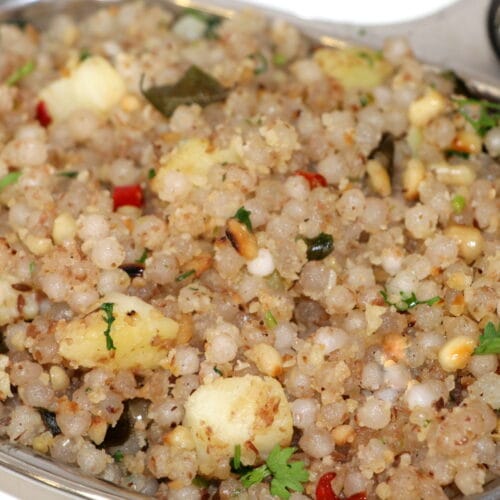
Sabudana Khichadi
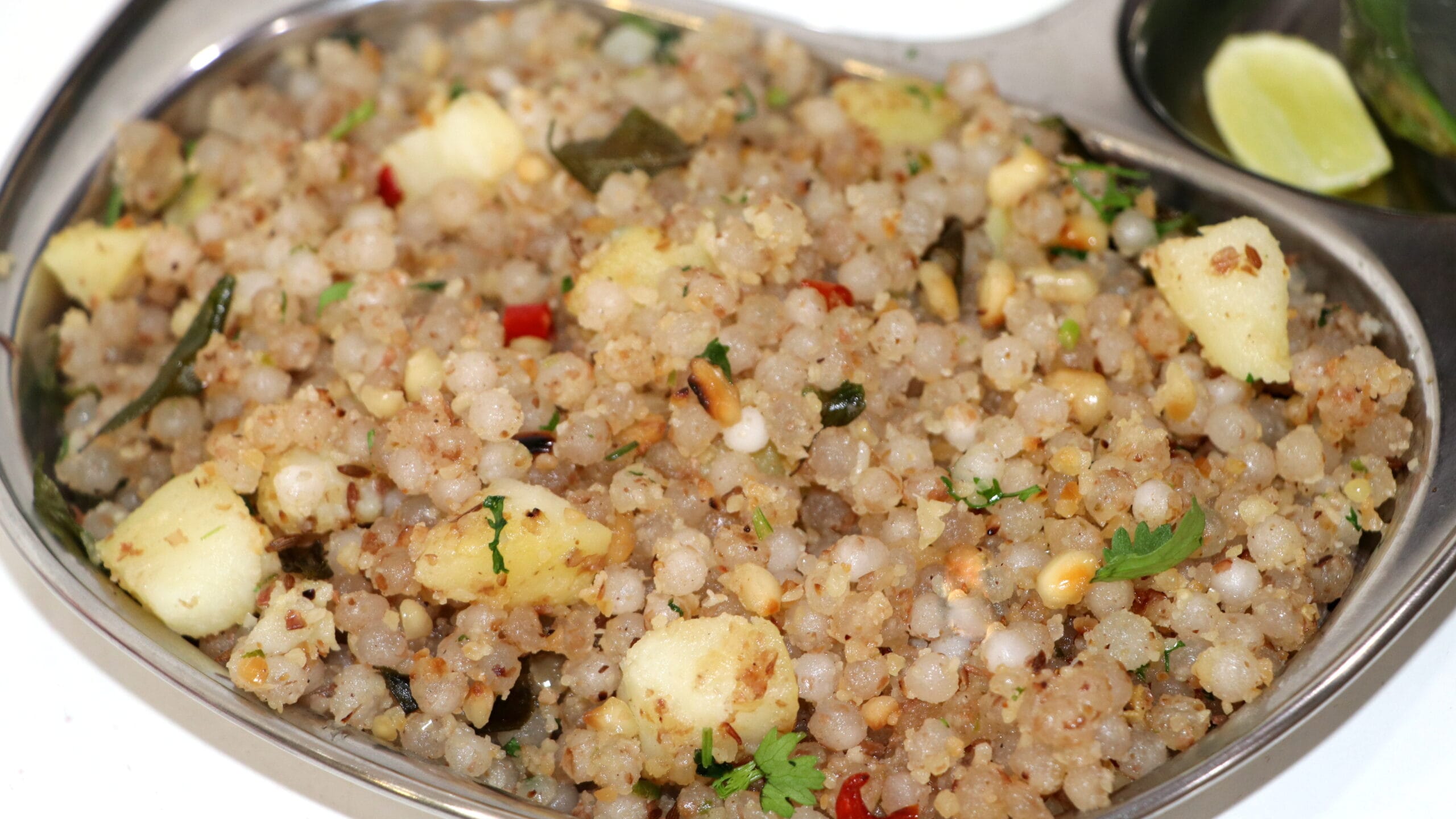
Sabudana Khichadi is a delicious, light, and flavorful Indian dish made with soaked tapioca pearls (sabudana), roasted peanuts, potatoes, and a simple tempering of ghee, cumin, green chilies, and curry leaves.
This khichadi is especially popular during fasting days, but you can also enjoy it as a wholesome breakfast or snack. The best Sabudana Khichadi should be soft, fluffy, and separate, with each sabudana pearl remaining beautifully non-sticky.
Today, I’m sharing an easy method to make perfectly fluffy and flavorful Sabudana Khichadi at home.
Why You’ll Love This Recipe
- Fluffy and non-sticky: Each sabudana pearl turns out soft, separate, and perfectly cooked.
- Simple ingredients: You only need a handful of everyday ingredients to make this delicious khichadi.
- Perfect for fasting: It’s a popular and satisfying option for vrat and fasting days.
- Quick and comforting: Once the sabudana is soaked, the khichadi comes together easily in one pan.
- Packed with flavor: Roasted peanuts, ghee, green chilies, cumin, curry leaves, and lemon juice make every bite delicious.
- Great for breakfast or snacks: You don’t have to wait for a fasting day this sabudana khichadi makes a wonderful breakfast or light meal anytime.
- Easy to customize: You can adjust the chilies, peanuts, potatoes, and seasonings according to your taste.
Video
Ingredients
- 1 cup sabudana (sago/tapioca pearls)
- ½ cup peanuts
- 1 large boiled potato
- 2 tbsp ghee (or oil)
- ½ tsp cumin seeds
- 4 green chilies, chopped
- ½ tsp finely chopped ginger
- 2 sprigs curry leaves
- ½ tsp sugar
- Salt, to taste
- Fresh coriander leaves, finely chopped, for garnish
- ½ tsp lemon juice
Method
Step 1 - Soak the Sabudana
- Firstly, take 1 cup of sabudana in a bowl and add water. Mix the sabudana well and wash it thoroughly. This helps remove the excess starch.
- Drain the water completely.
- Now add approximately 1 cup of fresh water to the washed sabudana. Cover and let it soak for 5–6 hours or overnight.
Step 2 - Roast the Peanuts
- Meanwhile, heat a pan and add ½ cup peanuts.
- Dry roast the peanuts over medium heat, stirring continuously until they are nicely roasted and change color.
- Turn off the heat and allow the peanuts to cool slightly.
- You can remove the peanut skins if you prefer, but they can also be used with the skins on.
- Transfer the roasted peanuts to a mixer jar. Add 1 green chili and grind everything into a coarse powder. Do not grind the peanuts into a fine paste.
- Your roasted peanut powder is now ready.
Step 3 - Prepare the Sabudana Mixture
- After 5–6 hours, check the sabudana. It should be well soaked, soft, and fluffy.
- Add the coarse roasted peanut powder to the soaked sabudana.
- Add ½ tsp sugar and salt to taste.
- Mix everything thoroughly. The peanut powder will absorb any excess moisture and help give the khichadi a beautifully fluffy, non-sticky texture.
- Keep the mixture aside.
Step 4 - Prepare the Tempering
- Heat a pan and add 2 tbsp ghee. You can use oil instead if preferred.
- Add ½ tsp cumin seeds and let them splutter.
- Then add the remaining chopped green chilies and ½ tsp finely chopped ginger. Sauté for a few minutes until fragrant.
- Add plenty of curry leaves.
- Now add 1 large boiled potato, cut into medium-sized pieces.
- Season the potatoes with a little salt and sauté them in the ghee for about 2 minutes, allowing them to become lightly golden.
Step 5 - Cook the Sabudana Khichadi
- Add the prepared sabudana and peanut mixture to the pan.
- Mix everything gently and thoroughly. Since salt and sugar have already been added to the sabudana mixture, there is no need to add more at this stage.
- Cover the pan with a lid and cook on medium heat for 4–5 minutes.
- This allows the sabudana to cook properly without becoming overly sticky.
Step 6 - Finish and Serve
- After 5 minutes, remove the lid.
- Add finely chopped fresh coriander leaves and ½ tsp lemon juice. Mix gently to combine.
- Our fluffy and delicious Sabudana Khichadi is ready. Turn off the heat and serve hot.
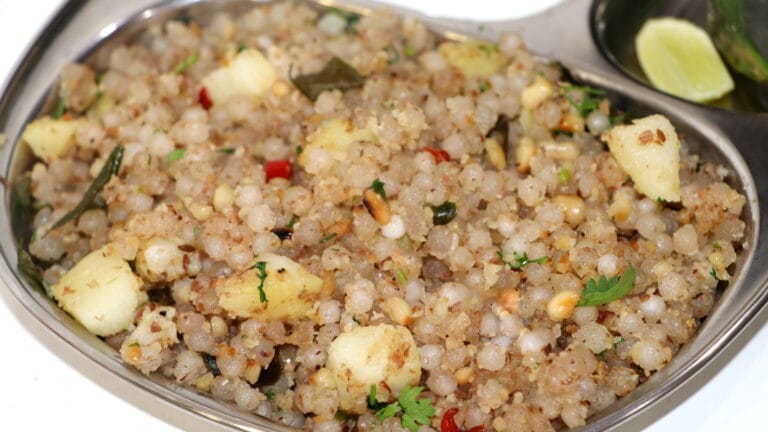
- Each sabudana pearl should be soft and separate, without the khichadi being too oily or sticky.
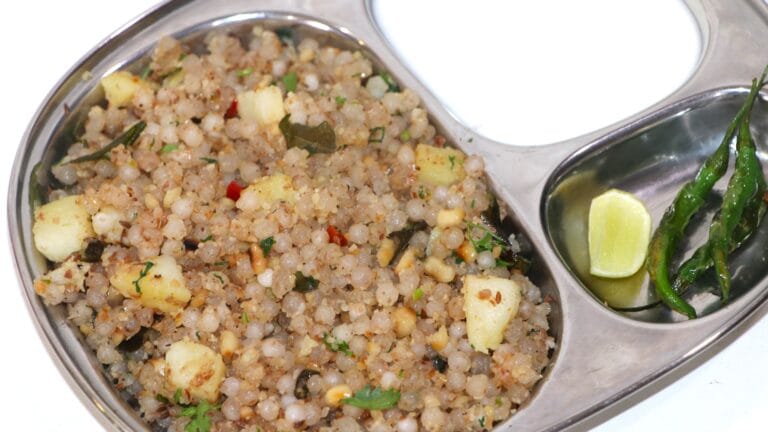
- For a traditional fasting meal, serve it with sweetened yogurt and fried green chilies.

Tips
- Wash the sabudana well: Rinsing removes excess starch and helps prevent sticky khichadi.
- Use the right amount of water: Too much water can make sabudana mushy and sticky.
- Soak properly: Allow the sabudana to soak for 5–6 hours or overnight for the best texture.
- Check the texture before cooking: Properly soaked sabudana should be soft and easily mashable between your fingers.
- Use coarse peanut powder: Avoid grinding the peanuts into a fine powder or paste, as coarse powder gives the khichadi a better texture.
- Do not overcook: Cooking for too long can make the sabudana sticky.
- Cook on medium heat: This helps the sabudana cook evenly.
- Add lemon juice at the end: It gives the khichadi a fresh, slightly tangy flavor.
- Adjust salt according to your needs: If making this recipe for fasting, use the type of salt permitted during your fast.
Recipe Card

Sabudana Khichadi Recipe - Vrat Recipe | साबूदाना खिचड़ी रेसिपी
Ingredients
- 1 cup sabudana sago/tapioca pearls
- ½ cup peanuts
- 1 large boiled potato
- 2 tbsp ghee or oil
- ½ tsp cumin seeds
- 4 green chilies chopped
- ½ tsp finely chopped ginger
- 2 sprigs curry leaves
- ½ tsp sugar
- Salt to taste
- Fresh coriander leaves finely chopped, for garnish
- ½ tsp lemon juice
Instructions
Soak the Sabudana
- Add 1 cup sabudana to a bowl and rinse it thoroughly with water to remove excess starch.
- Drain the water completely.
- Add approximately 1 cup fresh water to the sabudana.
- Cover and soak for 5–6 hours or overnight.
Prepare the Peanut Powder
- Heat a pan and add ½ cup peanuts.
- Dry roast the peanuts over medium heat, stirring continuously until nicely roasted and lightly golden.
- Turn off the heat and allow them to cool slightly.
- If desired, remove the peanut skins.
- Transfer the peanuts to a mixer jar and add 1 green chili.
- Grind into a coarse peanut powder. Do not grind it into a fine paste.
Prepare the Sabudana Mixture
- After soaking, check that the sabudana is soft and well hydrated.
- Add the coarse peanut powder to the soaked sabudana.
- Add ½ teaspoon sugar and salt to taste.
- Mix everything well and keep aside.
Make the Tempering
- Heat 2 tablespoons ghee in a pan. You can use oil instead of ghee if preferred.
- Add ½ teaspoon cumin seeds and let them splutter.
- Add the remaining chopped green chilies and chopped ginger.
- Sauté for a few minutes until fragrant.
- Add curry leaves.
- Add the boiled potato, cut into medium-sized pieces.
- Add a little salt and sauté the potatoes in the ghee for about 2 minutes
Cook the Sabudana Khichadi
- Add the prepared sabudana and peanut mixture to the pan.
- Mix gently until everything is well combined.
- Cover the pan and cook over medium heat for 4–5 minutes.
- Remove the lid and gently mix once more.
- Add chopped fresh coriander leaves and ½ teaspoon lemon juice.
- Mix gently, turn off the heat, and serve hot.
- Serve Sabudana Khichadi hot with sweetened yogurt, plain yogurt, or fried green chilies. It makes a delicious breakfast, snack, or fasting meal.

Video
Notes
- Wash the sabudana thoroughly to remove excess starch and prevent stickiness.
- Do not use too much water while soaking.
- Properly soaked sabudana should be soft and easily mashable between your fingers.
- Coarse peanut powder gives the khichadi a better texture.
- Avoid overcooking the sabudana, as it can become sticky.
- If preparing this recipe for vrat, use fasting-approved salt according to your tradition.
More Vrat Recipes
FAQs
The most common reasons are using too much water while soaking, not washing the sabudana properly, or overcooking it. Make sure you drain the soaking water completely and use the correct amount of fresh water.
Generally, 5–6 hours or overnight works well. The exact soaking time can vary depending on the size and quality of the sabudana.
Take a pearl between your fingers and press it gently. Properly soaked sabudana should feel soft and should mash easily without a hard center.
Yes. You can replace the ghee with oil. However, ghee gives the khichadi a richer flavor and aroma.
Yes. Potatoes add texture and flavor, but you can skip them if you prefer.
Yes. Sabudana Khichadi is traditionally enjoyed during fasting in India. However, fasting rules differ, so use ingredients that are permitted according to your fasting tradition.
It tastes delicious with sweetened yogurt, plain yogurt, or fried green chilies. A little extra lemon juice can also be added while serving.
The key is to wash the sabudana thoroughly, soak it with the right amount of water, drain it properly, use coarse roasted peanut powder, and avoid overcooking.