
Table of Contents
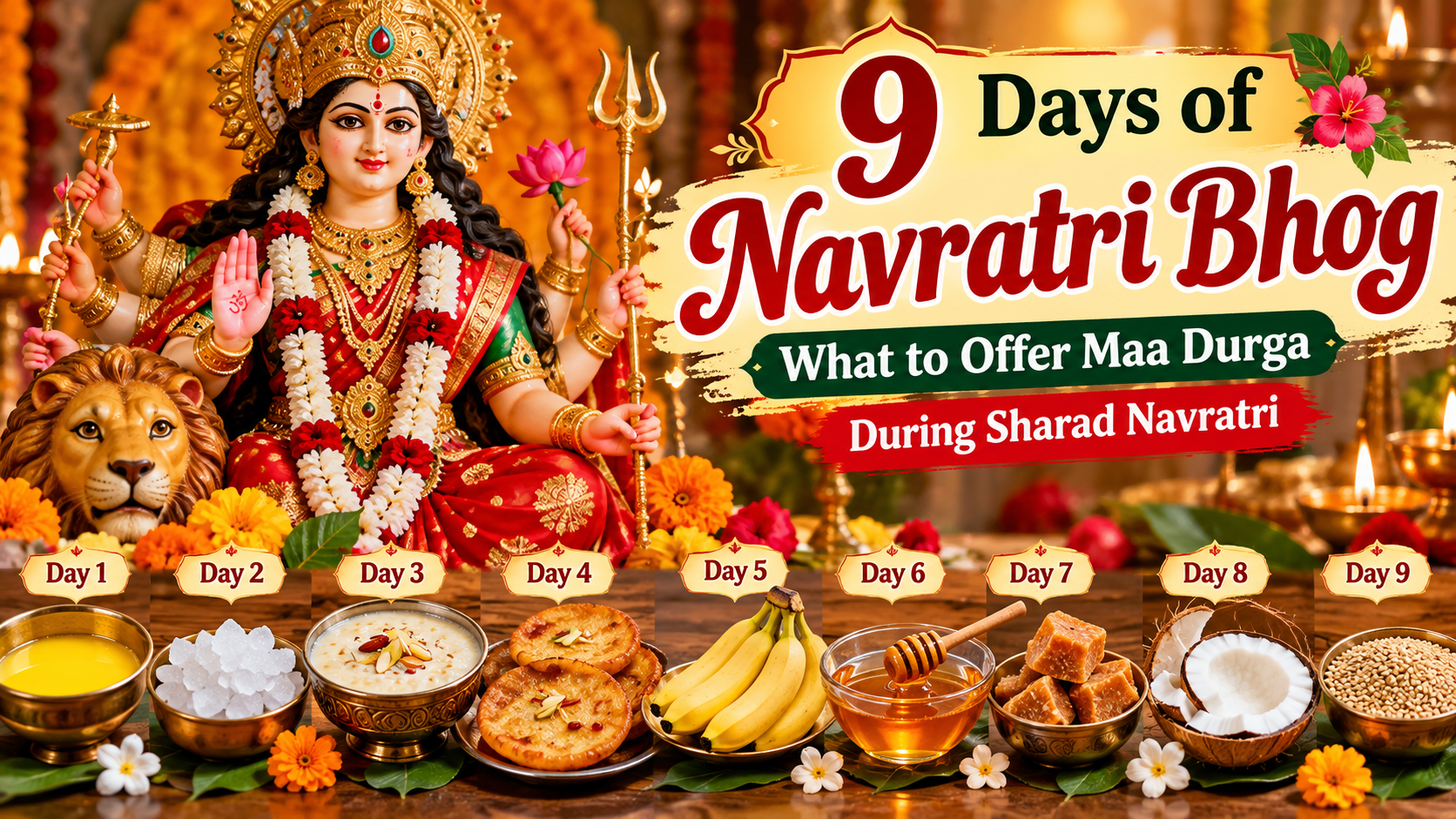
Toggle9 Days of Navratri Bhog: What to Offer Maa Durga During Sharad Navratri
Sharad Navratri is a beautiful festival filled with devotion, happiness, and delicious homemade prasad. During these nine special days, devotees worship Maa Durga in her nine different forms and offer bhog to seek her blessings.
For many Indian families, preparing bhog is an important part of Navratri celebrations. From fresh fruits and milk to traditional sweets and homemade halwa, every offering is prepared with love and devotion.
If you are looking for ideas for Navratri bhog for all nine days, here is a simple guide to help you plan your daily offerings during Sharad Navratri.
Day 1: Maa Shailputri
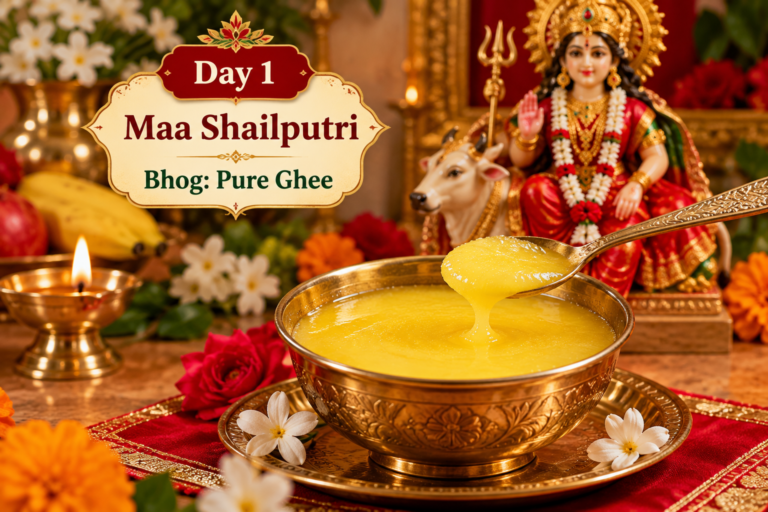
The first day of Sharad Navratri is dedicated to Maa Shailputri, the first form of Goddess Durga.
Bhog to Offer: Pure ghee
Devotees traditionally offer pure cow’s ghee to Maa Shailputri. You can also prepare simple homemade sweets or offer fruits as part of your prayers.
Offering ghee is believed to bring good health and positivity.
Day 2: Maa Brahmacharini
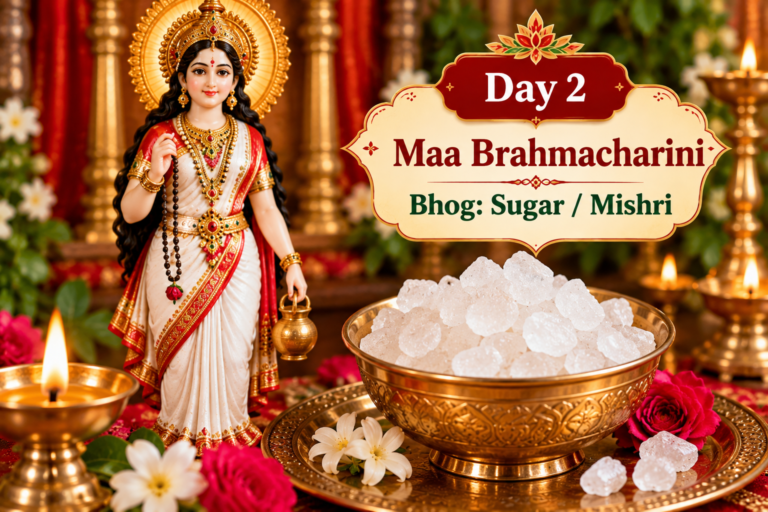
The second day is dedicated to Maa Brahmacharini, who represents devotion, patience, and wisdom.
Bhog to Offer: Sugar and mishri (rock sugar)
Devotees offer sugar, mishri, or simple homemade sweets to the Goddess. Fruits can also be offered as prasad.
This offering is associated with peace, happiness, and blessings for the family.
Day 3: Maa Chandraghanta
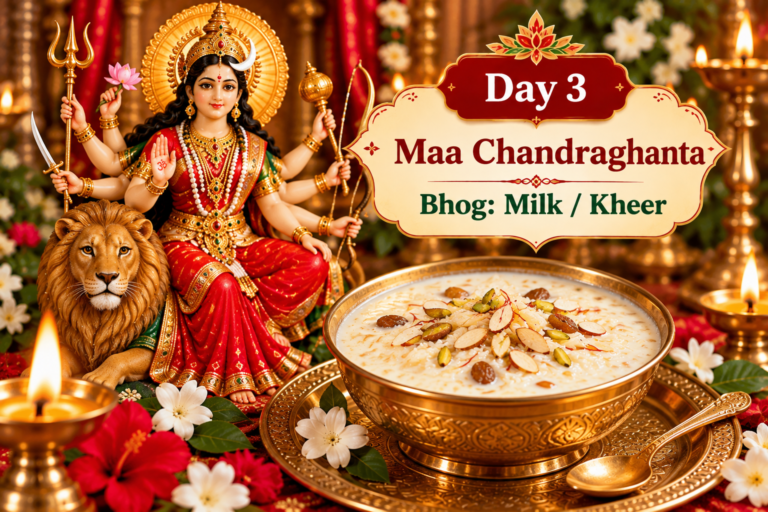
The third day is dedicated to Maa Chandraghanta, who symbolizes courage, strength, and protection.
Bhog to Offer: Milk and milk based sweets
You can offer milk, kheer, or other simple mill based sweets to Maa Chandraghanta.
Devotees believe that worshipping the Goddess with devotion brings peace and courage into their lives.
Day 4: Maa Kushmanda
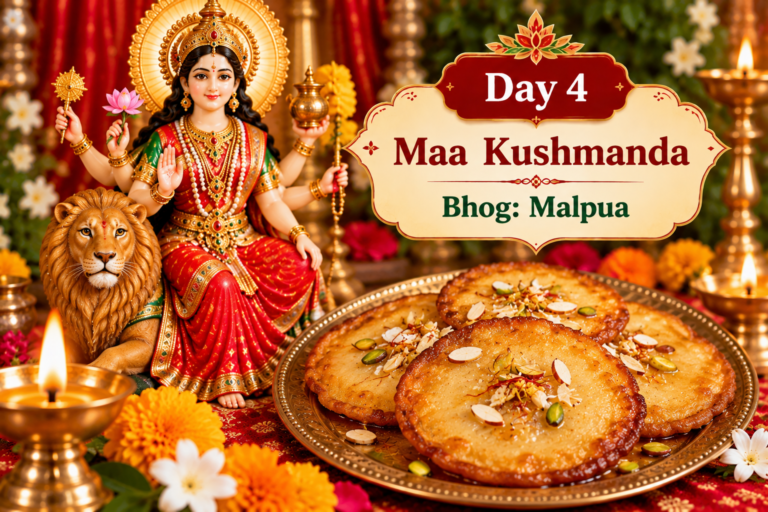
The fourth day of Navratri is dedicated to Maa Kushmanda, who is associated with energy, health, and creation.
Bhog to Offer: Malpua
Malpua is a traditional sweet that many devotees prepare as an offering to Maa Kushmanda. You can also offer seasonal fruits or other homemade sweets.
The offering symbolizes happiness, positivity, and prosperity.
Day 5: Maa Skandamata
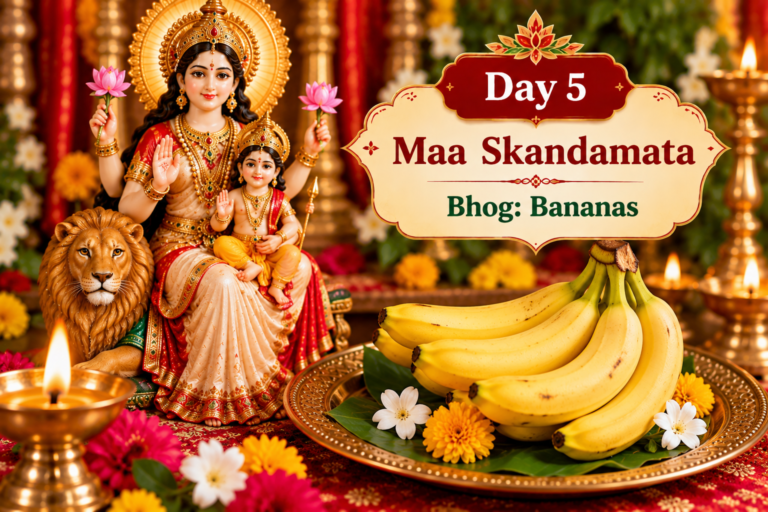
The fifth day is dedicated to Maa Skandamata, the loving mother of Lord Kartikeya.
Bhog to Offer: Bananas
Bananas are traditionally offered to Maa Skandamata. You can also prepare a simple fruit prasad for the Goddess.
This offering is associated with family happiness, well being, and peace.
Day 6: Maa Katyayani
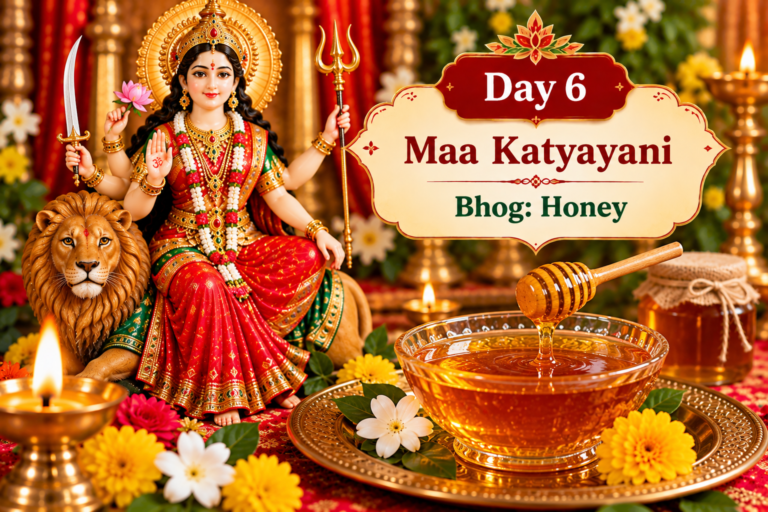
The sixth day of Sharad Navratri is dedicated to Maa Katyayani, who represents courage, power, and strength.
Bhog to Offer: Honey
Devotees traditionally offer honey to Maa Katyayani. You can also offer fruits or simple homemade sweets.
Honey symbolizes sweetness and is associated with happiness and positivity.
Day 7: Maa Kalaratri
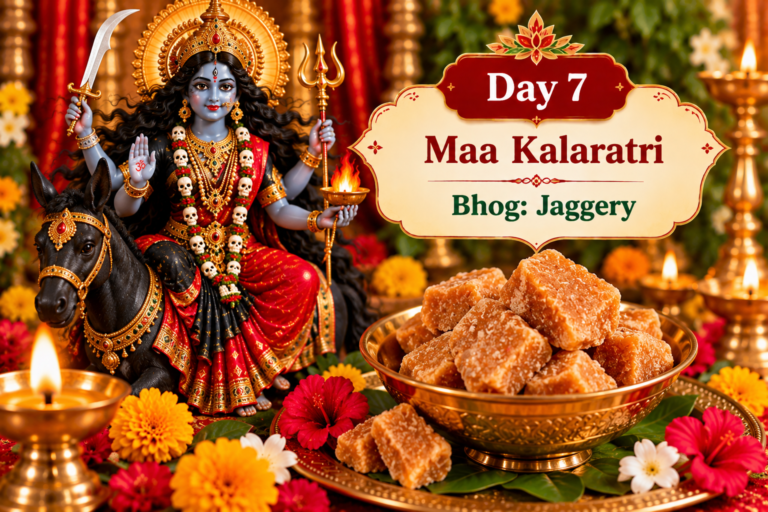
The seventh day is dedicated to Maa Kalaratri, a powerful form of Goddess Durga who protects devotees from negativity and fear.
Bhog to Offer: Jaggery
Jaggery, also known as gur, is a traditional offering to Maa Kalaratri. You can offer a small piece of jaggery or prepare a simple sweet using it.
Devotees pray to Maa Kalaratri for courage, protection, and the removal of obstacles.
Day 8: Maa Mahagauri
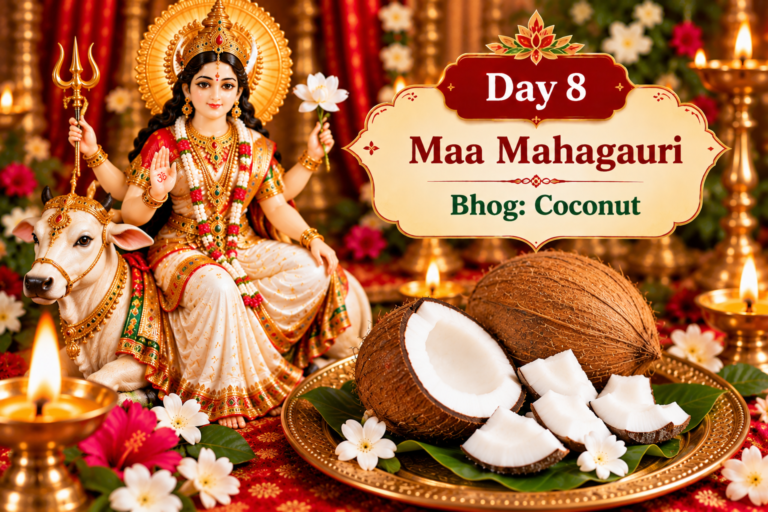
The eighth day is known as Ashtami and is dedicated to Maa Mahagauri, who symbolizes purity, peace, and compassion.
Bhog to Offer: Coconut and coconut based sweets
Coconut is a common offering during Navratri. You can offer fresh coconut, coconut ladoos, or other homemade sweets.
Many families also perform Kanya Pujan on Ashtami, inviting young girls for worship and offering them food as a form of respect for the Goddess.
Day 9: Maa Siddhidatri
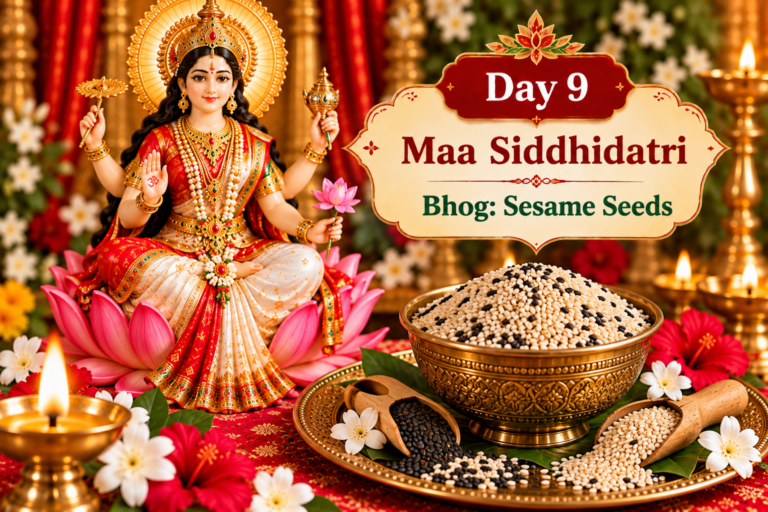
The ninth day is known as Navami and is dedicated to Maa Siddhidatri, the Goddess associated with spiritual wisdom and divine blessings.
Bhog to Offer: Sesame seeds
Sesame seeds are traditionally associated with offerings to Maa Siddhidatri. You can offer sesame seeds or prepare a simple sweet using them.
Many devotees also perform Kanya Pujan on Navami and prepare puri, kala chana, and halwa as prasad.
Sharad Navratri is a special time to worship Maa Durga and celebrate her nine divine forms. Offering bhog each day is a beautiful tradition that brings families together in prayer and devotion.
From ghee and sugar to bananas, honey, coconut, and other traditional offerings, every bhog is a symbol of love and gratitude toward the Goddess.
You do not need to prepare expensive or complicated dishes to please Maa Durga. Offer simple, fresh food with a pure heart and sincere devotion.
May Maa Durga bless you and your family with happiness, good health, peace, and prosperity.
Jai Mata Di!
Wishing you and your family a blessed and joyful Sharad Navratri!