Table of Contents
ToggleGujarati White Dhokla Recipe (Idada) with Peanut Chutney
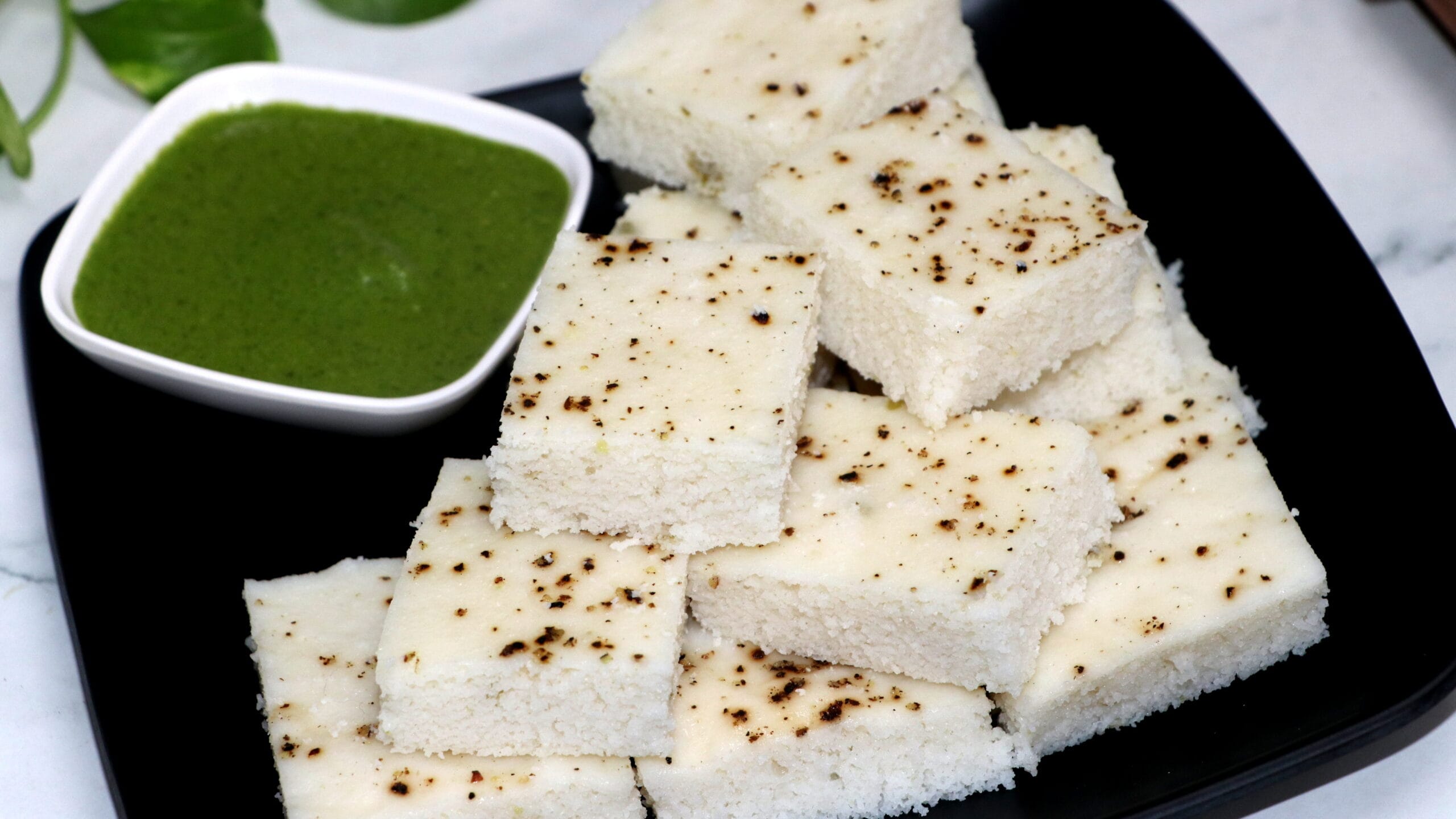
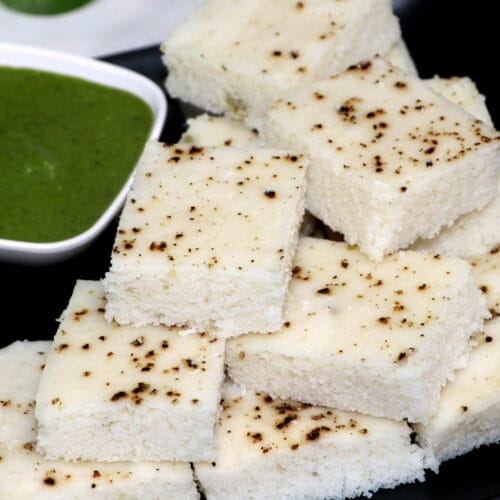
If you love soft and fluffy Gujarati snacks, you must try this Gujarati White Dhokla recipe, also known as Idada or Safed Dhokla. This popular steamed snack is especially loved in Surat and is a wonderful option for breakfast or an evening snack.
Unlike instant dhokla recipes, this traditional version is made using rice, urad dal, and poha. The batter is naturally fermented, which gives the dhokla its characteristic soft texture and beautiful, airy pores.
It is very similar to preparing idli batter, but the batter is seasoned differently and steamed in a thin layer to make soft, light, and jalidar white dhokla.
The best part is that leftover idli batter can also be used to make this dhokla. Serve it with the quick peanut and coriander chutney included in this recipe for a delicious Gujarati-style breakfast.
Video
Ingredients
For White Dhokla / Idada
- 1½ cups rice
- ½ cup urad dal (split black gram, skinless)
- ¼ cup poha (flattened rice)
- 3 tablespoons yogurt
- 1 tablespoon finely crushed ginger and green chilli paste
- Salt to taste
- A pinch of baking soda
- Water, as needed
- Oil, for greasing and brushing
- ½ teaspoon coarsely crushed black pepper
For Peanut Chutney
- 2 tablespoons roasted peanuts
- 1 green chilli
- A small piece of ginger
- A handful of fresh coriander leaves
- ¼ teaspoon sugar
- Salt to taste
- 2 tablespoons yogurt
- A little water, as needed
Method
1. Make Gujarati White Dhokla
Step 1 - Wash and soak the rice and urad dal
- Firstly, take 1½ cups rice and ½ cup urad dal in a large bowl.
- Wash them thoroughly with water 2–3 times until the water runs relatively clear.
- Add enough water and soak the rice and urad dal together for 4–5 hours.
Step 2 - Soak the poha
- Take ¼ cup poha and rinse it once with water.
- Add the washed poha to the soaked rice and urad dal and let it soak for another 10–15 minutes.
- The poha helps give the dhokla a soft and fluffy texture.
Step 3 - Grind the batter
- Drain the excess water from the soaked ingredients.
- Transfer the rice, urad dal, and poha to a blender or mixer grinder.
- Add a little water as needed and grind into a smooth batter.
- The batter should be similar to a traditional idli batter—not too thin and not too thick. Transfer the batter to a large bowl.
Step 4 - Add yogurt and ferment
- Add 3 tablespoons yogurt to the batter.
- Mix well for a minute so that some air is incorporated into the batter.
- Cover the bowl and keep it in a warm place to ferment for approximately 10–12 hours, or until the batter has increased in volume and looks light and airy.
- The fermentation time can vary depending on the weather and room temperature. In warmer weather, the batter may ferment faster.
Step 5 - Prepare the fermented batter
- Once the batter has fermented well, gently stir it.
- Do not overmix the batter, as you want to retain the air that has developed during fermentation.
- At this stage, you can also refrigerate the fermented batter and use it over the next few days.
- Now add 1 tablespoon ginger-green chilli paste, Salt to taste, A pinch of baking soda. Mix gently until everything is combined.
- Our white dhokla batter is now ready for steaming.
Step 6 - Prepare the steaming plate
- Grease a flat steel plate or dhokla thali with a little oil.
- Pour a portion of the batter into the greased plate.
- Spread it evenly into a thin layer.
- Sprinkle some coarsely crushed black pepper over the top.
Place the plate carefully inside a preheated steamer.
Cover with the lid and steam on medium heat for approximately 15 minutes.
Avoid opening the steamer repeatedly while the dhokla is cooking.
Step 7 - Check if the dhokla is ready
- After 15 minutes, insert a toothpick or knife into the centre.
- If it comes out clean, the dhokla is cooked.
Carefully remove the plate from the steamer and allow it to cool slightly. Brush a little oil over the surface of the dhokla for a light shine.
Cut the white dhokla into squares, diamonds, or your preferred shape.
Serve warm with peanut chutney, green chutney, or your favourite Indian chutney.
2. Prepare Peanut Chutney for White Dhokla
- For chutney, add roasted peanuts – 2 tbsp, green chilli – 1, a small piece of ginger, coriander leaves – handful, sugar – 1/4 tsp, and salt to a blender.
- Add 2 tablespoons yogurt.
- Blend everything into a smooth or slightly coarse chutney, according to your preference.
- Add a little water if required to adjust the consistency.
- Transfer to a serving bowl and serve with freshly steamed white dhokla.
Store leftover white dhokla in an airtight container in the refrigerator for up to 2–3 days.
To soften refrigerated dhokla, warm it briefly in a steamer or microwave before serving.

Tips
- Good fermentation is the key: Properly fermented batter gives you soft, airy, and porous dhokla.
- Use fresh urad dal for better fermentation.
- Do not make the batter too watery.
- Keep the batter in a warm place while fermenting.
- Don’t overmix the fermented batter.
- Add baking soda just before steaming.
- Steam the dhokla on medium heat for even cooking.
- Grease the steaming plate well to prevent sticking.
- For beautifully soft dhokla, don’t spread the batter too thickly.
- Always preheat the steamer before placing the dhokla inside.
- If your kitchen is cold, fermentation may take longer than 10–12 hours.
Recipe card

Gujarati White Dhokla Recipe | Soft, Spongy & Fluffy Idada | सूरत का फेमस सॉफ्ट स्पंजी सफेद ढोकला
Ingredients
For white dhokla / Idada
- 1½ cups rice
- ½ cup urad dal split black gram, skinless
- ¼ cup poha flattened rice
- 3 tablespoons yogurt
- 1 tablespoon finely crushed ginger and green chilli paste
- Salt to taste
- A pinch of Baking soda
- Water as needed
- Oil for greasing and brushing
- 1/2 tsp coarsely crushed black pepper
For peanut chutney
- 2 tablespoons roasted peanuts
- 1 green chilli
- A small piece of ginger
- A handful of fresh coriander leaves
- ¼ teaspoon sugar
- Salt to taste
- 2 tablespoons yogurt
- A little water as needed
Instructions
Prepare the Dhokla Batter
- Add rice and urad dal to a large bowl. Wash them 2–3 times and soak in enough water for 4–5 hours.
- Rinse the poha and add it to the soaked rice and urad dal. Let everything soak together for another 10–15 minutes.
- Drain the excess water and transfer the soaked ingredients to a blender. Add a little water as needed and grind into a smooth, idli-like batter.
- Transfer the batter to a large bowl. Add 3 tablespoons yogurt and mix well.
- Cover the bowl and keep it in a warm place for 10–12 hours, or until the batter has risen and looks light and airy.
Prepare the fermented batter
- Once fermented, gently stir the batter. Do not overmix.
- Add ginge & green chilli paste and salt to taste.
- Add a pinch of baking soda and gently mix until just combined.
Steam the White Dhokla
- Grease a flat steaming plate or dhokla thali with a little oil.
- Pour some batter into the greased plate and spread it evenly into a thin layer.
- Sprinkle coarsely crushed black pepper over the top.
- Place the plate in a preheated steamer. Cover and steam on medium heat for about 15 minutes.
- Insert a toothpick or knife into the centre. If it comes out clean, the dhokla is ready.
- Remove the plate from the steamer and allow the dhokla to cool for a few minutes.
- Brush a little oil over the surface and cut the dhokla into squares or diamonds.
Make the Peanut Chutney
- Add roasted peanuts, green chilli, ginger, coriander leaves, sugar, salt and yogurt to a blender.
- Blend until smooth or slightly coarse, adding a little water as needed.
- Serve the soft white dhokla warm with fresh peanut chutney.

Video
Notes
- Proper fermentation is the most important step for making soft and spongy white dhokla.
- Fermentation time may vary depending on the temperature of your kitchen.
- Do not overmix the fermented batter.
- Add baking soda just before steaming.
- Spread the batter in a relatively thin and even layer for the characteristic jalidar texture.
- Always preheat the steamer before placing the dhokla inside.
- You can use leftover idli batter to make this dhokla.
- The fermented batter can be refrigerated and used over the next few days.
- If the batter is refrigerated, bring it closer to room temperature before preparing the dhokla.
FAQs
Gujarati White Dhokla, also called Idada or Safed Dhokla, is a traditional steamed Gujarati snack made from fermented rice and urad dal batter. It is soft, light, and slightly tangy.
The batter is quite similar to idli batter because both use rice and urad dal. However, white dhokla is typically seasoned differently, spread in a thinner layer, and served as a Gujarati snack.
Yes! Leftover idli batter can be used to make white dhokla. Simply season it with ginger-green chilli paste, salt, and a little baking soda before steaming.
Poha helps make the dhokla softer, lighter, and fluffier.
Generally, the batter takes around 10–12 hours to ferment, but the exact time depends on the room temperature and climate.
Yes. Once the batter has fermented, you can refrigerate it and use it over the next few days.
Hard dhokla can result from insufficient fermentation, a batter that is too thick, overmixing after fermentation, or steaming for too long.
You can, but baking soda helps give the dhokla a lighter and softer texture. For this traditional version, a small pinch is added just before steaming.
White dhokla tastes delicious with peanut chutney, coriander chutney, coconut chutney, or green chutney. It can be served for breakfast or as an evening snack.